
 English
 中文简体
中文简体 Español
 عربى
عربى
Stainless Steel Vent Plug, Plastic Vent Plug, and Aluminum Alloy Vent Plug: Technical Comparison and Application Guide
 2026.07.07
 Industry News
Content
- 1 Definition and Technical Scope
- 2 Working Principle and Technical Mechanism
- 3 Technical Specifications and Performance Requirements
- 4 Quality Control and Testing Standards
- 5 Application Scenarios in Industrial Systems
- 5.1 Electrical and Electronic Enclosures
- 5.2 Telecommunications and Outdoor Cabinet Systems
- 5.3 LED Lighting and Luminaire Housings
- 5.4 Automotive and Transportation Enclosures
- 5.5 Marine and Offshore Equipment
- 5.6 Industrial Motors, Gearboxes, and Rotating Equipment
- 5.7 Renewable Energy and Battery Enclosures
- 6 Procurement and Installation Compatibility Considerations
- 7 Industry Development Trends and Future Outlook
- 8 Frequently Asked Technical Questions
- 9 System Level Summary
Stainless steel vent plug, plastic vent plug, and aluminum alloy vent plug products are small threaded or press fit fittings installed into the wall of an enclosure, housing, or sealed container to allow internal air pressure to equalize with the surrounding environment while restricting the ingress of liquid water, dust, and other contaminants. Across industrial equipment, electrical enclosures, and outdoor infrastructure, the choice between stainless steel, plastic, and aluminum alloy vent plug body material directly affects corrosion resistance, mechanical load capacity, weight, and compatibility with the enclosure material into which the plug is installed.
Definition and Technical Scope
A vent plug functions as a controlled air exchange point within an otherwise sealed enclosure wall. The core functional element within most vent plug designs is a semi permeable membrane, typically constructed from expanded polytetrafluoroethylene, mounted within or beneath the plug body. This membrane permits air and water vapor to pass through microscopic pores while blocking liquid water droplets, dust particles, and insects due to surface tension and pore size effects. The surrounding plug body, made from stainless steel, plastic, or aluminum alloy depending on the selected variant, provides the mechanical structure that holds the membrane in position, forms a sealed interface with the enclosure wall, and in many designs incorporates a thread profile or press fit geometry for installation.
Stainless steel vent plug construction is typically specified for enclosures operating in corrosive, high temperature, or high mechanical load environments, using austenitic stainless steel grades such as 304 or 316 depending on the required corrosion resistance level. Plastic vent plug construction, most commonly molded from polyamide materials such as PA66, is specified for general purpose enclosures where cost efficiency, light weight, and adequate chemical resistance are the primary selection criteria. Aluminum alloy vent plug construction occupies a position between these two categories, offering a lighter weight alternative to stainless steel with higher mechanical strength and thermal conductivity than plastic, and is frequently selected to match the base material of die cast aluminum enclosures for galvanic compatibility and consistent appearance.
Working Principle and Technical Mechanism
The technical mechanism underlying vent plug function depends on both the membrane technology used for air and moisture exchange and the mounting method by which the plug body material integrates with the enclosure wall.
Membrane Based Pressure Equalization
Internal air pressure within a sealed enclosure changes continuously due to temperature fluctuation from ambient conditions, internal heat generation from electronic or electrical components, and altitude changes during transport or installation. Without a venting path, these pressure changes stress the enclosure seals and gasket interfaces, and can draw moisture into the enclosure through microscopic gaps during the cooling phase of each thermal cycle, a phenomenon commonly described as breathing. The membrane within a vent plug allows this internal pressure to equalize gradually with ambient pressure, reducing the differential pressure across the enclosure seal system and limiting the amount of moisture that would otherwise be drawn inward during cooling cycles.
Thread and Mounting Interface Design
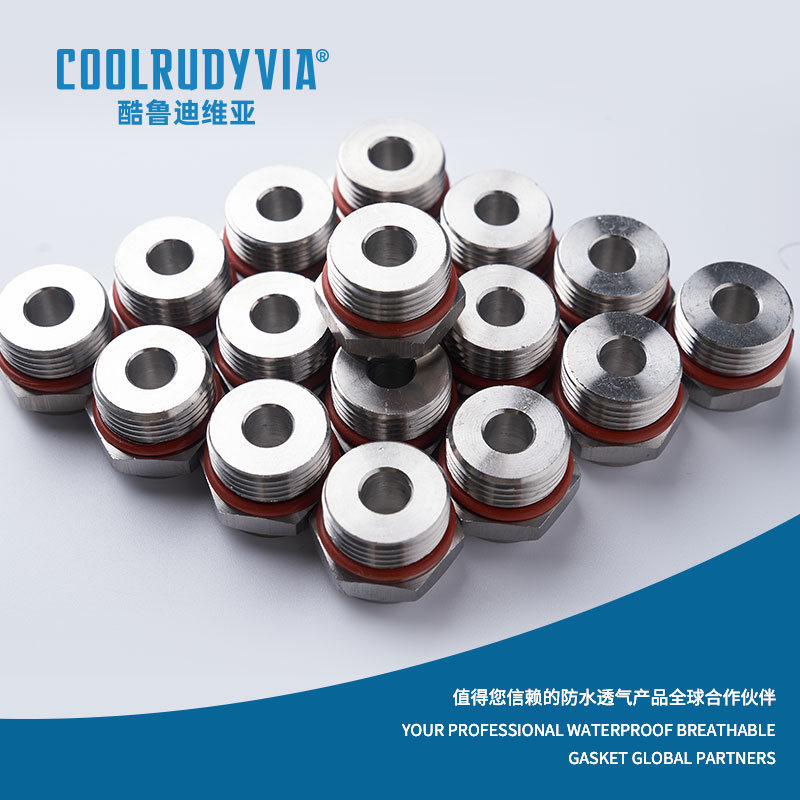
Stainless steel vent plug and aluminum alloy vent plug variants are most commonly manufactured with a machined or cast external thread profile, allowing installation into a tapped hole within the enclosure wall, with a sealing washer or O-ring compressed against the enclosure surface to prevent leakage around the thread interface. Plastic vent plug variants are available in both threaded and snap-fit press-in configurations, with the snap-fit design incorporating a flexible retaining flange that deforms during insertion and returns to its original shape once seated within the enclosure mounting hole, eliminating the need for thread cutting on the enclosure wall.
Corrosion and Environmental Resistance Mechanism
Stainless steel vent plug bodies achieve corrosion resistance through the formation of a passive chromium oxide layer on the material surface, which self-repairs when exposed to oxygen following minor surface damage. This mechanism supports long-term performance in marine, coastal, and chemically aggressive environments where consistent exposure to moisture and salt is expected. Aluminum alloy vent plug bodies rely on a naturally forming aluminum oxide layer for base corrosion resistance, which is frequently supplemented with anodizing or powder coating surface treatment to improve resistance to pitting corrosion, particularly in environments with chloride exposure. Plastic vent plug bodies achieve environmental resistance through the inherent chemical stability of the polymer material itself, with polyamide formulations offering resistance to oils, fuels, and many industrial chemicals, though with generally lower maximum operating temperature and mechanical load capacity compared to metallic alternatives.
Technical Specifications and Performance Requirements
Selection among stainless steel vent plug, plastic vent plug, and aluminum alloy vent plug variants for a specific application requires evaluation against a defined set of technical specifications, including thread size, waterproof rating, operating temperature range, and mechanical load capacity.
Waterproof rating, expressed according to the International Protection rating system, defines the level of protection against dust and water ingress achieved by the vent plug when correctly installed, with IP66, IP67, and IP68 ratings commonly specified depending on the exposure conditions anticipated for the enclosure. Operating temperature range varies significantly across the three body material variants, with stainless steel and aluminum alloy vent plug bodies generally supporting a wider temperature range than plastic vent plug bodies, which are limited by the thermal deformation and embrittlement characteristics of the polymer material at temperature extremes.
The following table summarizes representative technical specification ranges for stainless steel vent plug, plastic vent plug, and aluminum alloy vent plug product categories. Actual values vary according to specific product design and membrane specification.
| Parameter | Stainless Steel Vent Plug | Plastic Vent Plug | Aluminum Alloy Vent Plug |
| Body Material | Stainless steel grade 304 or 316 | Polyamide PA66, PA66 plus GF30 | Aluminum alloy, commonly die cast or machined |
| Operating Temperature | minus 40 to 150 degrees Celsius | minus 30 to 100 degrees Celsius | minus 40 to 120 degrees Celsius |
| Waterproof Rating | IP67 to IP68 | IP66 to IP67 | IP67 |
| Thread Size Range | M8 to M20, NPT options available | M6 to M16 | M8 to M16 |
| Corrosion Resistance | high, suited to marine and chemical exposure | moderate, suited to general indoor and outdoor use | moderate to high with surface treatment applied |
| Relative Weight | highest among the three variants | lowest among the three variants | intermediate, lighter than stainless steel |
Beyond these baseline parameters, procurement specifications for vent plugs frequently reference membrane airflow rate, torque rating for the mounting thread, salt spray test duration for corrosion performance verification, and pull out force rating for press fit plastic vent plug designs installed in thin walled enclosures.
Quality Control and Testing Standards
Consistent performance across stainless steel vent plug, plastic vent plug, and aluminum alloy vent plug product lines depends on a structured testing framework applied during product development and production quality control. Airflow rate testing verifies that the membrane component permits the specified rate of pressure equalization under controlled differential pressure conditions, confirming consistency across production batches regardless of body material variant. Waterproof rating verification is typically conducted through standardized water ingress testing, including water jet exposure for IP66 rated products and temporary immersion testing for IP67 and IP68 rated products, with the vent plug mounted in a test fixture representative of actual enclosure installation conditions.
Corrosion resistance testing for stainless steel vent plug and aluminum alloy vent plug variants commonly includes salt spray exposure testing conducted over an extended duration, with surface condition and mechanical function evaluated at defined intervals to confirm that corrosion resistance claims are maintained over the expected service life of the product. Mechanical testing for plastic vent plug variants, particularly press fit and snap fit designs, includes pull out force testing to verify that the retaining flange geometry maintains adequate mounting security within the specified enclosure wall thickness range.
Application Scenarios in Industrial Systems
Stainless steel vent plug, plastic vent plug, and aluminum alloy vent plug variants are applied across a broad range of industrial enclosure types, with material selection typically determined by the operating environment and mechanical requirements of each application.
Electrical and Electronic Enclosures
Plastic vent plug components are widely specified for indoor electrical control cabinets, junction boxes, and general purpose electronic enclosures where cost efficiency and adequate environmental protection are the primary requirements. Stainless steel vent plug components are more frequently specified for outdoor electrical enclosures exposed to weather, industrial atmospheres, or washdown cleaning procedures, where the higher corrosion resistance and mechanical durability of stainless steel justify the additional material cost.
Telecommunications and Outdoor Cabinet Systems
Outdoor telecommunications cabinets and base station enclosures commonly use stainless steel vent plug or aluminum alloy vent plug variants to manage internal pressure changes from equipment heat generation while maintaining a waterproof seal against rain and humidity exposure over extended outdoor service periods. Aluminum alloy vent plug selection in this application is frequently driven by the need to match the aluminum extrusion or die cast body material commonly used in telecommunications cabinet construction, reducing the risk of galvanic corrosion at the plug mounting interface.
LED Lighting and Luminaire Housings
Aluminum alloy vent plug and plastic vent plug variants are both used within LED luminaire housings, where the vent plug manages pressure changes generated by LED driver heat cycling while resisting moisture ingress that could otherwise cause internal condensation and lens fogging. Aluminum alloy vent plug bodies are frequently selected for luminaire housings constructed from die cast aluminum to maintain material consistency and reduce the risk of galvanic corrosion between dissimilar metals at the mounting interface.
Automotive and Transportation Enclosures
Plastic vent plug and aluminum alloy vent plug components are used in automotive applications including headlamp housings, electronic control unit enclosures, and battery pack enclosures, where weight reduction is a relevant design consideration alongside waterproof performance. Stainless steel vent plug components are less commonly used in weight sensitive automotive applications but may be specified in heavy commercial vehicle or off road equipment enclosures where mechanical durability takes priority over weight reduction.
Marine and Offshore Equipment
Stainless steel vent plug components, typically manufactured from 316 grade stainless steel for enhanced chloride resistance, are the predominant choice for marine equipment enclosures, deck fittings, and offshore instrumentation housings, where continuous exposure to saltwater spray and humidity requires the highest available corrosion resistance among the three vent plug material variants.
Industrial Motors, Gearboxes, and Rotating Equipment
Stainless steel vent plug and aluminum alloy vent plug variants are both applied to motor housings, gearbox casings, and other rotating equipment enclosures, where internal heat generation from mechanical operation creates significant internal pressure cycling that requires reliable membrane venting to prevent seal stress and lubricant contamination from moisture ingress.
Renewable Energy and Battery Enclosures
Aluminum alloy vent plug components are increasingly specified in battery pack enclosures for electric vehicles and stationary energy storage systems, where lightweight construction is a priority alongside flame retardant performance and waterproof sealing at higher IP rating levels than typically required in general industrial enclosures. Plastic vent plug variants incorporating flame retardant polymer formulations are also used in this application category where weight reduction and cost efficiency are prioritized over the thermal performance advantages of metallic vent plug bodies.
Procurement and Installation Compatibility Considerations
Selection between stainless steel vent plug, plastic vent plug, and aluminum alloy vent plug variants for a specific procurement requirement involves evaluation of several factors beyond baseline waterproof rating and thread size compatibility. Galvanic compatibility between the vent plug body material and the enclosure material is a relevant consideration, particularly for aluminum alloy vent plug installation into enclosures constructed from dissimilar metals, where an insulating washer or coating may be specified to reduce galvanic corrosion risk at the mounting interface. Enclosure wall thickness is a relevant consideration for plastic vent plug press fit designs, since the retaining flange geometry is typically specified for a defined wall thickness range, and installation into a wall thickness outside this range can reduce mounting security or waterproof sealing performance.
Installation torque specification is a relevant procurement consideration for threaded stainless steel vent plug and aluminum alloy vent plug variants, with manufacturers typically providing a recommended torque range to achieve adequate sealing washer compression without risking thread damage, particularly relevant for aluminum alloy enclosures where excessive torque can deform the mounting hole thread. Buyers evaluating vent plug options for a specific enclosure platform commonly request technical data sheets confirming airflow rate, waterproof rating, operating temperature range, and corrosion test results for each body material variant under consideration, supporting a documented comparison against the mechanical and environmental requirements of the target application.
Industry Development Trends and Future Outlook
The vent plug industry is developing in response to lightweighting requirements, material substitution trends, and increasing performance expectations across electrical, automotive, and renewable energy applications.
Growth in aluminum alloy vent plug adoption has been observed within electric vehicle battery enclosure and renewable energy equipment applications, driven by the ongoing shift toward lightweight aluminum enclosure construction across these sectors and the corresponding preference for matching plug body material to reduce galvanic corrosion risk at the mounting interface. Plastic vent plug development has focused on flame retardant polymer formulations meeting increasingly stringent safety standards required for battery enclosure and electronic equipment applications, alongside continued cost optimization through material and manufacturing process refinement.
Stainless steel vent plug demand remains concentrated in marine, offshore, and heavy industrial applications where corrosion resistance and mechanical durability requirements exceed what plastic or aluminum alloy alternatives can reliably provide over extended outdoor service periods. Surface treatment technology for aluminum alloy vent plug bodies has also continued to advance, with improved anodizing and coating processes extending the corrosion resistance performance of aluminum alloy variants closer to that of stainless steel in moderately corrosive environments, supporting broader adoption of aluminum alloy vent plug components in applications previously limited to stainless steel selection.
Standardization of thread profiles and mounting interfaces across vent plug product lines has also progressed, supporting easier specification and interchange between stainless steel vent plug, plastic vent plug, and aluminum alloy vent plug variants within a common enclosure design platform, allowing manufacturers to select body material according to application requirements without redesigning the enclosure mounting interface.
Frequently Asked Technical Questions
What is the difference between a stainless steel vent plug and a plastic vent plug
The primary difference between a stainless steel vent plug and a plastic vent plug is body material, which affects corrosion resistance, operating temperature range, and mechanical load capacity. Stainless steel vent plug bodies generally offer higher corrosion resistance and a wider operating temperature range, while plastic vent plug bodies offer lower weight and lower material cost for general purpose enclosure applications.
When should an aluminum alloy vent plug be selected over stainless steel or plastic
An aluminum alloy vent plug is typically selected when the enclosure body itself is constructed from aluminum, since matching plug and enclosure material reduces galvanic corrosion risk at the mounting interface, or when a lighter weight alternative to stainless steel is required while maintaining higher mechanical strength and thermal conductivity than a plastic vent plug.
What waterproof rating do vent plugs typically achieve
Vent plugs across stainless steel, plastic, and aluminum alloy body material variants typically achieve waterproof ratings between IP66 and IP68 depending on membrane specification and installation quality, with the specific rating dependent on product design rather than body material alone.
How is the correct vent plug thread size determined for an enclosure
Correct vent plug thread size is determined by the diameter of the mounting hole machined or molded into the enclosure wall, with common thread sizes across stainless steel, plastic, and aluminum alloy vent plug variants ranging from M6 to M20 depending on the specific product line and enclosure design.
Can stainless steel, plastic, and aluminum alloy vent plugs be used interchangeably within the same enclosure design
In many cases, standardized thread profiles and mounting interfaces allow stainless steel vent plug, plastic vent plug, and aluminum alloy vent plug variants to be used interchangeably within a common enclosure mounting hole design, though waterproof rating, mechanical load capacity, and corrosion resistance should be verified against the target application requirements before substituting one body material variant for another.
What service life can be expected from a vent plug installed in an outdoor enclosure
Service life expectations for stainless steel vent plug, plastic vent plug, and aluminum alloy vent plug products depend on the specific body material, membrane specification, and environmental exposure conditions at the installation site. Stainless steel vent plug components installed in marine or coastal environments generally provide the longest expected service life due to superior corrosion resistance, while plastic vent plug components in less aggressive indoor or general outdoor environments can achieve comparable service life at lower material cost, provided that ultraviolet exposure and temperature extremes remain within the specified operating range of the polymer body material.
System Level Summary
Vent plugs, available in stainless steel, plastic, and aluminum alloy body material variants, function as pressure equalization and moisture control components within sealed industrial enclosures, using a semi permeable membrane to allow air and water vapor exchange while blocking liquid water and dust ingress. Technical specifications including waterproof rating, operating temperature range, thread size, and corrosion resistance govern suitability for applications spanning electrical enclosures, telecommunications cabinets, LED luminaire housings, automotive systems, marine equipment, industrial motors, and battery enclosures. As lightweighting trends, flame retardant material development, and surface treatment technology continue to evolve, procurement evaluation of stainless steel vent plug, plastic vent plug, and aluminum alloy vent plug options increasingly requires matching body material selection to the specific corrosion, weight, and mechanical performance requirements of each enclosure application, supporting continued integration of vent plug components across diverse industrial systems.

-
Phone Number
+86 138 6105 7907
-
Address
No. 58 Fengjiatou, Xiaoliu Village, Luoyang Town, Wujin District, Changzhou, Jiangsu, China
Copyright © Changzhou Baonong New Material Technology Co., Ltd.All rights reserved
PrivacyCustom Waterproof Breathable Membranes/Gaskets/Plugs/Caps