
 English
 中文简体
中文简体 Español
 عربى
عربى
How Do Waterproof Breathable Gaskets Protect Electronics?
 2026.04.09
 Industry News
Content
- 1 Understanding Waterproof Breathable Gasket Technology
- 2 The Science Behind Breathable Sealing
- 3 Types of Waterproof Breathable Solutions
- 4 Engineering Specifications
- 4.1 IP67 Rated Ventilation Seal RequiremenIP67-ratedted ventilation seal designation indicates complete dust protection and temporary immersion resistance. Testing involves submersion in 1 meter of water for 30 minutes. Validated components maintain airflow specifications after environmental exposure.
- 4.2 Airflow Rate and Water Entry Pressure
- 4.3 Pressure Equalization Seal Gasket Performance Metrics
- 5 Industrial Applications
- 6 Material Selection Guidelines
- 7 Frequently Asked Questions
- 8 References
Design engineers face a paradox when sealing electronic enclosures. Complete sealing blocks water ingress, but traps heat and pressure changes. Waterproof breathable gasket technology solves this problem by allowing air passage while blocking liquid water. This article explains the engineering principles behind these specialized sealing components.
Understanding Waterproof Breathable Gasket Technology
A waterproof breathable gasket combines traditional sealing functions with selective permeability. These components maintain pressure balance between sealed enclosures and external environments. They prevent condensation buildup while protecting sensitive electronics from water damage.
Electronic devices generate heat during operation. Temperature changes cause internal air expansion and contraction. Without ventilation, pressure differentials reach 200-300 millibars during normal thermal cycling. These pressure swings stress seals, cause condensation, and potentially draw water through microscopic gaps. Breathable gaskets equalize pressure without compromising waterproof integrity.
The Science Behind Breathable Sealing
The technology relies on microporous membranes with controlled pore structures. Physical properties determine whether liquids pass through while gases permeate freely.
ePTFE Membrane Structure
ePTFE waterproof breathable membrane consists of expanded polytetrafluoroethylene with a node-and-fibril microstructure. Manufacturing processes stretch PTFE to create billions of small pores per square centimeter. Pore sizes range from 0.1 to 10 micrometers,s depending on application requirements.
Water exhibits high surface tension, approximately 72 millinewtons per meter at room temperature. This surface tension prevents liquid water from entering pores smaller than 0.5 micrometers under normal pressure conditions. Air molecules, however, pass through these openings with minimal resistance.
Surface Energy and Wetting Behavior
PTFE possesses extremely low surface energy,gy around 18 dynes per centimeter. This hydrophobic characteristic enhances water repellency. The contact angle between water and ePTFE exceeds 120 degrees, creating a self-cleaning effect. Low surface energy materials resist wetting even under prolonged water exposure.
Material properties comparison for breathable sealing applications:
| Property | ePTFE | Polyurethane | Polyethylene |
| Pore Size Range | 0.1-10 microns | 0.1-50 microns | 0.2-5 microns |
| Water Entry Pressure | 0.3-2.0 bar | 0.1-0.5 bar | 0.2-1.0 bar |
| Air Permeability | High | Moderate | Low-Moderate |
| Temperature Range | -200 to 260 C | -40 to 80 C | -70 to 80 C |
| Chemical Resistance | Excellent | Good | Good |
Types of Waterproof Breathable Solutions
Manufacturers offer multiple product formats to suit different enclosure designs and assembly methods. Each type serves specific mounting and performance requirements.
Adhesive Gasket Rings
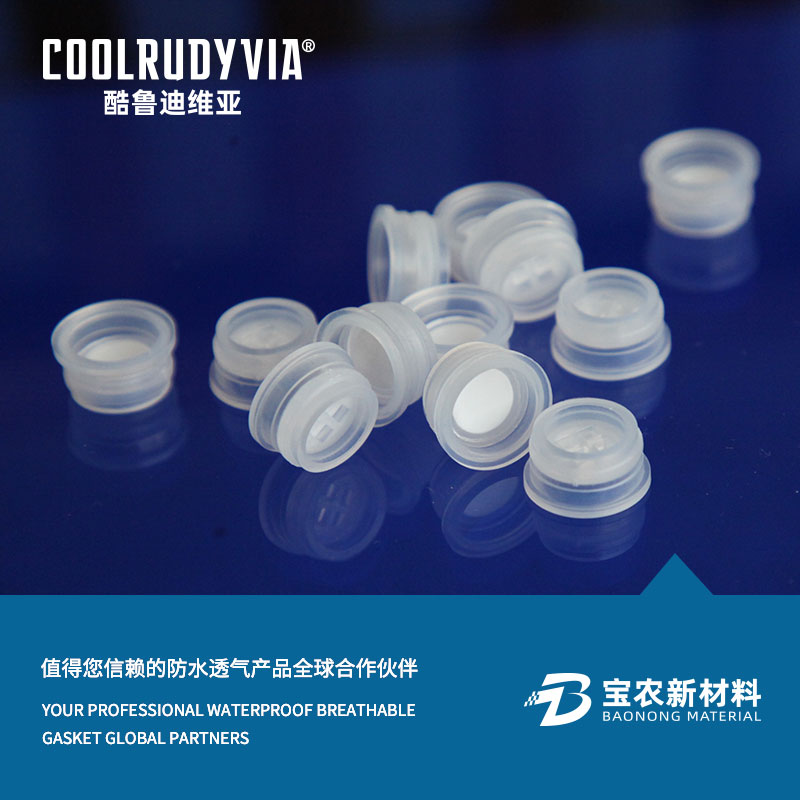
Adhesive-backed gaskets integrate breathable membranes into conventional sealing profiles. These products replace standard O-rings or flat gaskets in existing groove designs. The adhesive layer bonds to plastic or metal housings without additional mechanical fasteners. Installation requires only surface cleaning and pressure application.
Screw-in Breather Valves
Threaded valves provide robust mounting for harsh environments. These units contain membrane elements protected by porous plastic or metal caps. The threaded design allows field replacement without disassembling the entire enclosure. Torque specifications ensure proper compression without membrane damage.
Weldable Membrane Patches
Ultrasonic or heat welding attaches membrane patches directly to plastic housings. This method eliminates adhesive aging concerns and creates permanent seals. Welding processes require precise temperature and pressure control to maintain membrane porosity. The technique suits high-volume manufacturing of consumer electronics and automotive components.
Product format comparison for design selection:
| Feature | Adhesive Gasket | Screw-in Valve | Welded Patch |
| Installation MethPressure-sensitive | I've adhesive | Threaded M5-M12 | Ultrasonic welding |
| Replacement Ease | Moderate | Easy | Difficult |
| IP Rating Capability | IP65-IP67 | IP67-IP69K | IP65-IP67 |
| Typical Cost | Low | Medium | Low-Medium |
| Best Application | Retrofit, small enclosures | Heavy equipment, EV | High volume, permanent |
Engineering Specifications
Proper specification requires understanding test standards and performance metrics. Engineers evaluate multiple parameters during component selection.
IP67 Rated Ventilation Seal RequiremenIP67-ratedted ventilation seal designation indicates complete dust protection and temporary immersion resistance. Testing involves submersion in 1 meter of water for 30 minutes. Validated components maintain airflow specifications after environmental exposure.
IP testing evaluates the complete assembly, not just the breathable element. Housing design, gasket compression, and membrane integration all affect final ratings. Engineers conduct validation testing on production-equivalent samples rather than relying solely on component certifications.
Airflow Rate and Water Entry Pressure
Airflow rate measures gas permeability in liters per minute at specified pressure differentials. Typical values range from 0.5 to 50 liters per minute at 70 millibars. Higher airflow enables faster pressure equalization but may reduce water protection margins.
Water entry pressure indicates the differential pressure required to force liquid through the membrane. Quality ePTFE membranes withstand 0.5 to 2.0 bars before leakage occurs. This safety margin accommodates pressure spikes from rapid temperature changes or altitude variations.
Pressure Equalization Seal Gasket Performance Metrics
Pressure equalization seal gasket performance depends on response time to pressure changes. Rapid equalization prevents seal stress and moisture ingress. Engineers calculate required airflow based on enclosure volume and maximum temperature change rates.
Automotive applications specify pressure equalization within seconds to accommodate rapid weather changes. Telecommunications equipment tolerates slower response times but requires consistent performance over 10-15 year service lives.
Industrial Applications
Automotive Lighting Breather Valve Applications
Automotive lighting breather valve installations prevent condensation in headlamp and taillight assemblies. Temperature cycles from engine heat and weather exposure create severe pressure fluctuations. Standard specifications require IP6K9K protection against high-pressure, high-temperature washdown.
LED lighting generates less heat than halogen systems but creates different challenges. Reduced thermal rise slows natural moisture evaporation. Effective breathers become more critical for LED enclosures to prevent persistent fogging.
Electric Vehicle Battery Enclosures
EV battery packs require pressure management during thermal management cycles. Liquid cooling systems create temperature gradients across large enclosures. Breathable seals equalize pressure without allowing coolant vapor or external water entry. Fire safety standards additionally require venting capabilities during thermal runaway events.
Outdoor Telecommunications Equipment
Cellular base stations and outdoor networking hardware face extreme environmental exposure. Temperature ranges from -40 to 60 degrees Celsius challenge seal integrity. Altitude variations at mountain installations create additional pressure differentials. Breathable gaskets maintain protection through these harsh conditions.
Material Selection Guidelines
ePTFE Waterproof Breathable Membrane vs Alternative Materials
ePTFE waterproof breathable membrane dominates industrial applications due to its combination of properties. Alternative materials include non-woven polyolefin fabrics and track-etched polycarbonate membranes. These alternatives offer lower cost but reduced temperature capability and chemical resistance.
Polyurethane membranes provide excellent toughness and puncture resistance. They suit applications with high mechanical stress or frequent handling. However, polyurethane hydrolyzes over time in humid conditions, limiting service life to 5-7 years compared to 20+ years for ePTFE.
Waterproof Gas Permeable Seal Material Options
Waterproof gas-permeable seal material selection balances performance requirements against cost constraints. Standard ePTFE suits most electronics applications. High-temperature environments above 150 degrees Celsius require specialized formulations with inorganic fillers.
Oil-resistant applications use fluorosilicone-coated membranes. These materials withstand exposure to lubricants and hydraulic fluids common in industrial machinery. Medical applications specify USP Class VI certified materials for biocompatibility.
Frequently Asked Questions
How do I calculate the required airflow for my enclosure?
Airflow requirements depend on enclosure volume and temperature change rate. Engineers use the ideal gas law to calculate air volume changes from temperature differentials. A general rule specifies 0.1-0.5 liters per minute per liter of enclosure volume for typical electronics. Rapidly heated enclosures or large volumes require higher flow rates. Consultation with gasket suppliers provides application-specific recommendations based on thermal modeling.
Can waterproof breathable gaskets fail over time?
Membrane performance degrades through contamination and mechanical damage. Oil, dust, and salt deposits block pores and reduce airflow. Physical contact punctures the thin membrane structure. Proper installation orientation protects the membrane surface from direct spray or contact. Service life typically exceeds 10 years in clean environments but may be reduced to 2-3 years in heavily contaminated industrial settings. Regular inspection and replacement schedules prevent unexpected failures.
What is the difference between IP67 and IP68 ratings for breathable seals?
IP67 certification requires protection against temporary immersion to 1 meter depth for 30 minutes. IP68 indicates protection against continuous immersion at specified depths and durations defined by the manufacturer. Most breathable gaskets achieve IP67 ratings. IP68 applications require specialized designs with additional sealing mechanisms or hydrophobic treatments. The breathable element itself may limit IP68 capability due to the fundamental trade-off between air permeability and water resistance.
References
- IEC 60529: Degrees of Protection Provided by Enclosures (IP Code). International Electrotechnical Commission, 2013.
- ASTM E96/E96M: Standard Test Methods for Water Vapor Transmission of Materials. ASTM International, 2016.
- SAE J575: Test Methods and Equipment for Lighting Devices and Components. Society of Automotive Engineers, 2021.
- ISO 20653: Road Vehicles - Degrees of Protection (IP Code) - Protection of Electrical Equipment Against Foreign Objects, Water and Access. International Organization for Standardization, 2013.
- Gore Technical Report: Fundamentals of Waterproof Breathable Venting. W.L. Gore & Associates, 2019.

-
Phone Number
+86 138 6105 7907
-
Address
No. 58 Fengjiatou, Xiaoliu Village, Luoyang Town, Wujin District, Changzhou, Jiangsu, China
Copyright © Changzhou Baonong New Material Technology Co., Ltd.All rights reserved
PrivacyCustom Waterproof Breathable Membranes/Gaskets/Plugs/Caps