
 English
 中文简体
中文简体 Español
 عربى
عربى
Does a Waterproof Vent Plug Really Work?
 2026.04.02
 Industry News
Content
Industrial equipment faces a constant battle between internal pressure changes and external moisture intrusion. When a sealed enclosure heats up during operation and cools down during shutdown, it naturally breathes. Without proper pressure equalization, this breathing action draws in moisture, dust, and contaminants that damage sensitive components. Engineers specify waterproof vent plug devices to solve this problem, but the market offers countless variations with vastly different performance characteristics. This article examines the engineering principles behind these components and provides technical criteria for selecting threaded versions that maintain seal integrity under real-world conditions.
Understanding How a Waterproof Vent Plug Functions
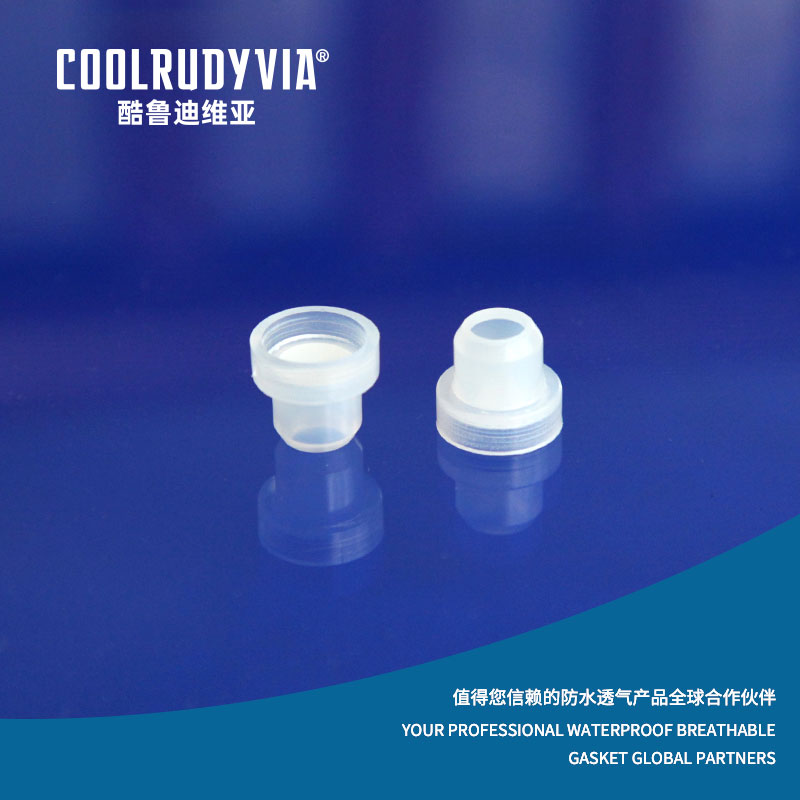
A waterproof vent plug operates on a simple principle: it allows air molecules to pass through while blocking liquid water and particulate contaminants. The core technology involves a microporous membrane, typically expanded polytetrafluoroethylene (ePTFE), that creates a physical barrier. This membrane contains billions of microscopic pores per square inch. These pores are approximately 0.2 to 10 micrometers in diameter, which is large enough for gas molecules to pass through but small enough to block water droplets that typically measure 100 micrometers or larger.
Five High-Search-Volume Long-Tail Keywords for This Category
Procurement professionals and design engineers frequently search for these specific configurations when sourcing components:
- waterproof vent plug with IP68 rating for outdoor enclosures
- threaded waterproof vent plug for automotive lighting assemblies
- push-fit waterproof vent plug for electronic junction boxes
- stainless steel waterproof vent plug for marine applications
- high flow rate waterproof vent plug for battery pack pressure equalization
Threaded vs. Push-Fit Configurations: Performance Comparison
When selecting a threaded waterproof vent plug, engineers must evaluate the mounting interface requirements against the application environment. Threaded versions provide superior mechanical retention and allow for consistent installation torque, which ensures the sealing gasket compresses properly. Push-fit designs offer faster assembly but require precise hole tolerances and may loosen under vibration over time.
The following table compares key specifications for threaded versus push-fit configurations:
| Parameter | Threaded Configuration | Push-Fit Configuration |
|---|---|---|
| Torque Retention | Consistent with specified torque values (typically 0.8-2.5 Nm) | Friction-dependent; can loosen with thermal cycling |
| Seal Reliability | A compression gasket provides a predictable sealing force. | Radial O-ring requires a precise bore surface finish (Ra ≤ 1.6 μm) |
| Installation Speed | Requires 2-3 seconds per unit with a power tool | 0.5 seconds per unit with manual insertion |
| Vibration Resistance | Excellent with a thread-locking patch or a prevailing torque feature | Moderate; may require adhesive backing or retention clips |
| Typical Applications | Automotive driveline, industrial gearboxes, and outdoor lighting | Consumer electronics, low-vibration indoor enclosures |
Critical Selection Criteria for Leak Prevention
The question "how to choose a threaded waterproof vent plug that won't leak" requires examining several engineering parameters. A leak occurs when either the membrane fails or the mounting interface seal fails. Engineers must specify both components correctly to achieve reliable performance.
Ingress Protection Rating Verification
Manufacturers rate waterproof vent plug products using IP codes. IP68 represents the highest common rating for continuous immersion. However, engineers should verify that the rating applies to the complete assembly, not just the membrane component. An IP68-rated membrane installed in an IP54-rated housing does not create an IP68 enclosure. Testing protocols require the complete assembly to withstand immersion at specified depths, typically 1.5 meters for 30 minutes minimum.
For a waterproof vent plug with an IP68 rating for outdoor enclosures, procurement specifications must also include UV resistance requirements. Polyamide materials degrade under sunlight exposure, while UV-stabilized grades maintain mechanical properties for outdoor service life exceeding five years.
Thread Design and Sealing Mechanism
Thread geometry directly affects sealing reliability. Standard metric threads (M5 through M20) dominate industrial applications. A threaded waterproof vent plug typically incorporates one of three sealing methods:
- Integrated O-ring: Requires a flat counterbore surface with proper surface finish; O-ring material selection depends on chemical exposure (NBR for oils, FKM for high temperatures, EPDM for brake fluids)
- Thread sealant coating: Pre-applied anaerobic adhesive that cures after installation; suitable for applications without a counterbore sealing surface
- Compression washer: Metal-backed rubber washer that provides consistent sealing force; preferred for large-diameter installations with coarse threads
For a stainless steel waterproof vent plug for marine applications, engineers specify 316 stainless steel to resist saltwater corrosion. The sealing O-ring must also resist chloride degradation; FKM or FFKM materials provide superior chemical resistance compared to standard nitrile compounds.
Flow Rate Requirements and Pressure Equalization
Flow rate capacity determines how quickly a vent can equalize pressure differentials. When an enclosure heats from 20°C to 80°C during operation, internal pressure increases approximately 20%. Without adequate venting, this pressure can exceed seal capabilities and cause gasket failure. For a high flow rate waterproof vent plug for battery pack pressure equalization, engineers calculate the required flow using the enclosure volume and expected temperature change rate.
Flow resistance is typically measured in milliliters per minute at a specified differential pressure, often 70 millibars. A standard automotive lighting assembly requires approximately 100-200 mL/min flow capacity. Large battery packs with volumes exceeding 50 liters may require 500-1000 mL/min capacity or multiple vent points.
Membrane Material Selection
The ePTFE membrane's properties determine both waterproofing and flow characteristics. Key specifications include:
- Water entry pressure (WEP): Minimum pressure required to force water through the membrane; quality products achieve 20-50 kPa minimum
- Air flow rate: Measured at 70 mbar differential; higher flow rates generally correlate with larger pore sizes
- Oleophobic treatment: Coating that prevents oil and surfactant contamination from blocking pores; critical for automotive and industrial applications exposed to lubricants or cleaning agents
For push-fit waterproof vent plugs for electronic junction boxes, engineers must consider the membrane's resistance to dust accumulation. Self-cleaning membrane designs use hydrophobic properties that cause water to bead and roll off, carrying surface dust with it during rainfall or washdown cycles.
Installation Quality Control
Even correctly specified components fail when installation procedures lack proper controls. For threaded waterproof vent plug installations, torque management is essential. Under-torqued plugs allow moisture ingress through the thread interface. Over-torqued plugs can deform the O-ring or crack plastic housing materials.
Engineers should specify torque values with acceptable ranges. A typical M6 threaded plug requires 1.2-1.8 Nm of torque. Assembly documentation must include torque tool calibration requirements and periodic verification procedures. For high-volume production environments, automated torque monitoring systems provide real-time feedback to prevent installation errors.
Frequently Asked Questions
Can a waterproof vent plug fail over time, and what causes failure?
Yes, waterproof vent plugs experience failure modes that compromise performance. Membrane contamination from oil mist, surfactants, or airborne particulates reduces airflow capacity and can eventually block the vent entirely. UV exposure degrades plastic housing materials in outdoor applications. O-ring compression set occurs when rubber seals lose elasticity after prolonged compression, reducing sealing force. Engineers should specify products with oleophobic membranes and UV-stabilized materials for applications with these exposure risks, and establish periodic inspection intervals for critical equipment.
What is the difference between IP65, IP67, and IP68 ratings for vent plugs?
IP65 indicates protection against water jets from any direction. IP67 indicates protection against temporary immersion between 15 cm and 1 meter depth for 30 minutes. IP68 indicates protection against continuous immersion at conditions specified by the manufacturer, typically deeper than 1 meter and for extended periods. For outdoor enclosures exposed to rain, IP65 or IP67 usually suffices. For submerged applications such as underwater lighting or marine through-hull fittings, IP68 with specified depth and duration is required.
How do I calculate the required vent flow rate for my enclosure?
Calculate required flow rate using the formula: Q = V × ΔP × f, where Q is required flow in mL/min, V is enclosure volume in liters, ΔP is maximum allowable pressure differential in millibars, and f is a factor based on temperature change rate. For practical engineering purposes, use 1.0 mL/min per liter of enclosure volume as a baseline for moderate thermal cycling applications. For enclosures with rapid temperature changes or largevolumese, consulthe t manufacturer's flow calculation tools or conduct testing with a representative prototype.
References
- International Electrotechnical Commission. (2023). IEC 60529: Degrees of protection provided by enclosures (IP Code).
- W.L. Gore & Associates. (2024). "Technical Guide: Pressure Equalization Venting for Electronic Enclosures."
- Society of Automotive Engineers. (2022). SAE J2380: Vibration Testing of Electric Vehicle Batteries.
- ASTM International. (2023). ASTM D751: Standard Test Methods for Coated Fabrics.
- American Society of Mechanical Engineers. (2021). ASME B1.1: Unified Inch Screw Threads.
- International Organization for Standardization. (2024). ISO 20653: Road vehicles - Degrees of protection (IP code).

-
Phone Number
+86 138 6105 7907
-
Address
No. 58 Fengjiatou, Xiaoliu Village, Luoyang Town, Wujin District, Changzhou, Jiangsu, China
Copyright © Changzhou Baonong New Material Technology Co., Ltd.All rights reserved
PrivacyCustom Waterproof Breathable Membranes/Gaskets/Plugs/Caps