
 English
 中文简体
中文简体 Español
 عربى
عربى
Which Waterproof Vent Plug Protects Your Equipment?
 2026.03.23
 Industry News
Content
- 1 Fundamentals of Waterproof Ventilation
- 2 IP67 Waterproof Vent Plug for Outdoor Lighting
- 3 M12 Waterproof Breathable Vent Plug
- 4 Waterproof Air Vent Plug for Electrical Enclosure
- 5 Plastic Waterproof Vent Plug with Membrane
- 6 Waterproof Screw In Vent Plug Manufacturer
- 7 Industry-Specific Application Engineering
- 8 Procurement and Customization Services
- 9 Frequently Asked Questions
- 9.1 How do I select the correct IP rating for my specific environment?
- 9.2 What is the typical service life of waterproof vent plug membranes, and when should replacement occur?
- 9.3 What minimum order quantities apply for custom-designed waterproof vent plugs?
- 9.4 How do M12 waterproof breathable vent plugs compare to adhesive-mounted alternatives?
- 9.5 What testing validates waterproof air vent plug performance for electrical enclosures?
- 10 References
Waterproof Vent Plug technology enables pressure equalization and moisture management in sealed enclosures while maintaining ingress protection. This technical examination covers IP rating systems, membrane engineering, and procurement specifications essential for B2B buyers in automotive, lighting, and industrial sectors.
Fundamentals of Waterproof Ventilation
IP Rating Standards and Ingress Protection
International Protection (IP) codes classify mechanical and electrical enclosures against intrusion from solids and liquids. The second digit specifically addresses liquid ingress protection, with ratings from 0 (no protection) to 9K (high-pressure steam cleaning).
IP Rating Specifications:
| Rating | Protection Level | Test Conditions | Typical Applications |
| IP54 | Limited dust, splashing water | 10L/min, 5 min duration | Indoor electrical panels |
| IP65 | Dust-tight, water jets | 12.5L/min, 3m distance | Outdoor lighting enclosures |
| IP66 | Dust-tight, powerful water jets | 100L/min, 3m distance | Marine equipment, heavy washdown |
| IP67 | Dust-tight, temporary immersion | 1m depth, 30 minutes | Submersible electronics |
| IP68 | Dust-tight, continuous immersion | Manufacturer specified | Underwater sensors, diving equipment |
| IP69K | Dust-tight, high-pressure steam | 80°C, 8-10 MPa pressure | Food processing, vehicle cleaning |
Breathable Membrane Science
Effective waterproof venting relies on expanded polytetrafluoroethylene (ePTFE) membranes with microporous structures (0.1-10 μm pore size). Surface tension prevents liquid water penetration (contact angle >140°) while water vapor diffuses through interconnected pores via Knudsen diffusion and Fickian transport.
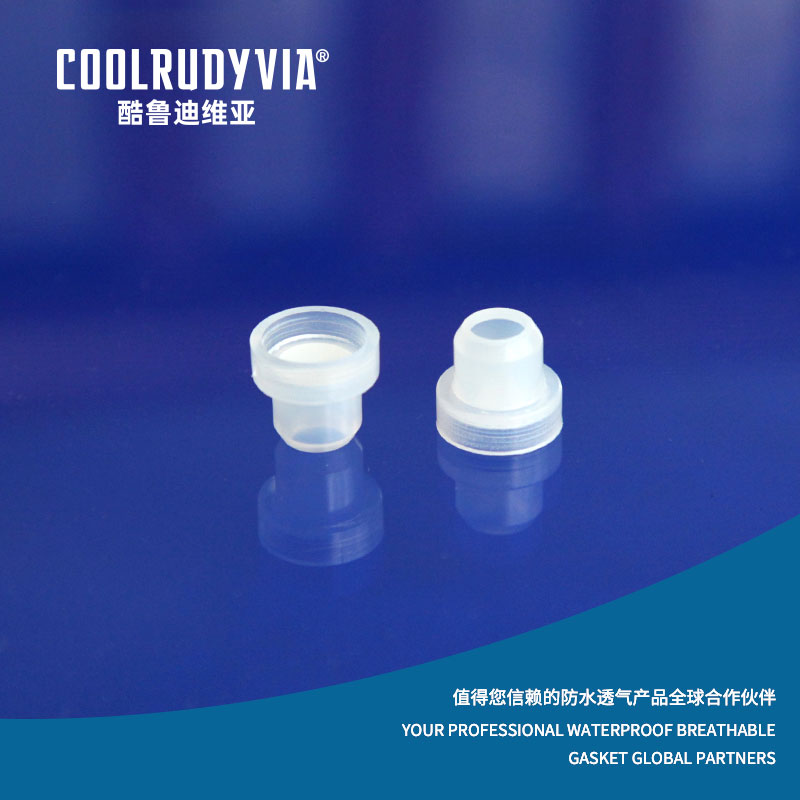
IP67 Waterproof Vent Plug for Outdoor Lighting
IP67 waterproof vent plug for outdoor lighting applications addresses the critical challenge of thermal cycling in sealed luminaires. LED efficiency generates heat during operation; cooling creates negative pressure drawing moisture through seals.
Dust and Immersion Resistance Requirements
Outdoor lighting fixtures face environmental exposure including rain, snow, and high-pressure cleaning. IP67 rating ensures functionality after temporary submersion during flooding or accidental immersion. Complete dust ingress protection (6 rating) prevents optical degradation from particulate accumulation on reflectors and lenses.
Changzhou Baonong New Material Technology Co., Ltd. develops waterproof and breathable products widely applied in automotive headlamps, ensuring safety in use and transportation through the feature of breathable yet waterproof.
Thermal Management in Sealed Luminaires
Vent plugs enable convective heat transfer while maintaining seal integrity. Thermal modeling indicates 15-25% reduction in internal cavity temperature compared to fully sealed designs, extending LED driver lifespan by 30-40%.
Outdoor Lighting Vent Specifications:
| Parameter | Street Lighting | Flood Lighting | High-Bay Industrial |
| Vent Diameter (mm) | 10-12 | 12-16 | 16-20 |
| Airflow Rate (L/min) | 0.5-1.0 | 1.0-2.0 | 2.0-4.0 |
| Operating Temperature (°C) | -40 to 85 | -40 to 100 | -40 to 120 |
| Membrane Area (mm²) | 20-30 | 40-60 | 80-120 |
| Protection Rating | IP67 | IP66/IP67 | IP66/IP68 |
M12 Waterproof Breathable Vent Plug
M12 waterproof breathable vent plug configurations utilize metric thread standards (M12×1.5) common in European automotive and industrial equipment. Thread geometry ensures mechanical retention while O-ring compression provides primary sealing.
Thread Standards and Sealing Geometry
M12×1.5 threads provide 1.5mm pitch with 60° flank angle. Engagement length of 8-10mm ensures adequate thread shear strength (minimum 50N tensile retention). O-ring materials include:
- FKM (Viton): -20°C to 200°C, excellent chemical resistance
- EPDM: -40°C to 120°C, superior water and steam resistance
- Silicone (VMQ): -60°C to 200°C, low compression set
- NBR: -30°C to 100°C, cost-effective general purpose
Automotive and Industrial Applications
M12 vents dominate automotive ECU enclosures, transmission control modules, and electric vehicle battery packs. Industrial automation applications include servo motor housings and PLC enclosures exposed to washdown environments.
Waterproof Air Vent Plug for Electrical Enclosure
Waterproof air vent plug for electrical enclosure systems prevent condensation-related failures through pressure equalization. Enclosure sealing traps moisture-laden air; temperature drops cause condensation on critical components.
Pressure Equalization and Condensation Prevention
Diurnal temperature variations of 20°C generate pressure differentials of 7-10 kPa in sealed 100-liter enclosures. Vent plugs equalize pressure within seconds while blocking liquid water ingress. Condensation risk reduction correlates with air exchange rate:
| Enclosure Volume (L) | Recommended Vent Flow (L/min) | Pressure Equalization Time | Condensation Risk Reduction |
| 10-25 | 0.2-0.5 | < 30 seconds | 85-90% |
| 25-100 | 0.5-1.5 | < 60 seconds | 80-85% |
| 100-500 | 1.5-5.0 | < 120 seconds | 75-80% |
| 500-2000 | 5.0-15.0 | < 300 seconds | 70-75% |
Enclosure Integrity Standards
NEMA 4X and UL 50E Type 4X ratings require corrosion resistance and water tightness equivalent to IP66. Vent plug integration must maintain these ratings through gasket compression and thread sealing.
Plastic Waterproof Vent Plug with Membrane
Plastic waterproof vent plug with membrane construction balances cost efficiency with performance requirements. Housing materials and membrane specifications determine chemical compatibility and service life.
ePTFE Membrane Engineering
Membrane manufacturing involves mechanical stretching of PTFE to create microporous structures (node-fibril morphology). Key parameters include:
- Porosity: 70-85% void fraction for high gas permeability
- Thickness: 20-100 μm balancing strength and permeability
- Bubble Point: >100 kPa (minimum pressure to force liquid through pores)
- Water Entry Pressure: >50 kPa for IP67 rating
- Air Permeability: 5-50 L/min/cm² at 7 kPa differential
Membrane Performance Comparison:
| Membrane Type | Water Entry Pressure (kPa) | Airflow (L/min/cm²) | Chemical Resistance | Operating Temp (°C) |
| ePTFE Standard | 50-100 | 20-30 | Excellent | -200 to 260 |
| ePTFE Oleophobic | 30-70 | 15-25 | Good (oil-resistant) | -200 to 260 |
| PU Coated | 30-50 | 10-20 | Moderate | -40 to 80 |
| PVDF | 40-80 | 15-25 | Excellent | -40 to 150 |
Material Compatibility and Chemical Resistance
Housing materials must withstand environmental exposure:
- PA66 (Nylon 66): Good mechanical strength, automotive fluids resistance
- PBT (Polybutylene Terephthalate): Excellent dimensional stability, electrical properties
- PP (Polypropylene): Cost-effective, chemical resistant, lower strength
- PEEK: High temperature, aggressive chemical environments
Changzhou Baonong New Material Technology Co., Ltd. owns an industrial standard workshop of over 6,000 square meters and is equipped with more than 90 sets of independent intellectual property-owned automated equipment that are high-speed, precise, stable and reliable.
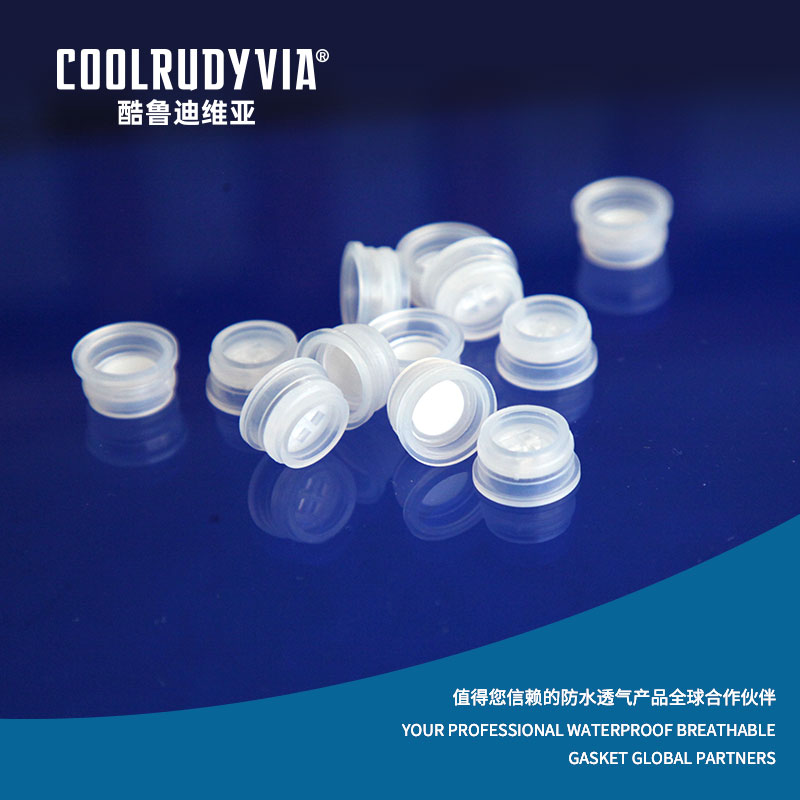
Waterproof Screw In Vent Plug Manufacturer
Selecting a waterproof screw in vent plug manufacturer requires verification of quality systems, testing capabilities, and production consistency. Thread precision and membrane integrity directly impact field performance.
Quality Control and Dual Inspection Systems
Comprehensive quality management encompasses:
- Incoming Material Inspection: Resin MFI testing, membrane bubble point verification
- In-Process Monitoring: Thread pitch diameter (±0.05mm), torque validation
- Final Testing: 100% leak testing (pressure decay method), visual inspection
- Statistical Process Control: Cpk >1.33 for critical dimensions
After eight years of development, Changzhou Baonong New Material Technology Co., Ltd. has become one of the few standardized, modern and high-quality integrated manufacturers specializing in waterproof and breathable membrane series products. Each product undergoes a dual inspection mechanism of automatic equipment testing and manual inspection, ensuring stable, reliable and safe quality.
Industry-Specific Application Engineering
Automotive Headlamp Protection
Modern LED headlamps generate significant heat in sealed housings. Vent plugs prevent condensation during thermal cycling while blocking dust and high-pressure wash water. Automotive specifications require:
- Temperature cycling: -40°C to 120°C, 500 cycles
- Pressure washing: 80°C, 80-100 bar, 10-15 cm distance
- Chemical resistance: fuels, oils, cleaning agents, road salts
- Vibration resistance: 10-2000 Hz, 5g RMS per ISO 16750-3
Beverage and Pesticide Packaging Venting
Agrochemical containers require venting to prevent pressure buildup during altitude changes or temperature fluctuations, while preventing liquid leakage if inverted. Waterproof Vent Plug technology enables:
- Pressure equalization during air transport (altitude 0-12,000m)
- Prevention of container deformation and label damage
- Blockage of liquid pesticide leakage (surface tension >50 mN/m)
- Compatibility with aggressive chemical formulations
These products are widely applied in beverage bottle packaging, pesticide packaging, etc., ensuring safety in use and transportation with the feature of breathable yet waterproof.
Procurement and Customization Services
OEM Specifications and Fast Delivery
Custom vent plug development addresses specific application requirements. Customization options include:
| Customization Type | Development Time | MOQ (units) | Tooling Investment |
| Color Variation (standard mold) | 1-2 weeks | 5,000 | None |
| Logo/Printing | 2-3 weeks | 10,000 | Minimal (printing setup) |
| Thread Size Modification | 4-6 weeks | 20,000 | Moderate (threading tools) |
| Custom Membrane Properties | 6-8 weeks | 50,000 | High (membrane development) |
| Complete Custom Design | 10-12 weeks | 100,000 | Full mold fabrication |
The company can provide customers with various professional products in a fast, stable, efficient and high-quality manner, helping customers gain consumers' trust.
Frequently Asked Questions
How do I select the correct IP rating for my specific environment?
IP rating selection balances protection requirements with cost and performance trade-offs. IP67 waterproof vent plug for outdoor lighting applications suits environments with temporary flooding risk or high-pressure cleaning. IP66 suffices for rain exposure without submersion. IP68 with specified depth rating addresses continuous underwater applications. Consider the worst-case scenario rather than typical conditions; maintenance procedures (pressure washing) often exceed environmental exposure. For automotive underhood applications, IP6K9K (steam cleaning resistance) provides additional security. Verify that the complete assembly, not just the vent component, maintains the rated protection when installed.
What is the typical service life of waterproof vent plug membranes, and when should replacement occur?
ePTFE membranes exhibit theoretical service life exceeding 20 years in benign environments. Actual lifespan depends on chemical exposure, temperature cycling frequency, and mechanical stress. Aggressive chemical environments (strong acids, bases, or oxidizers) may degrade membranes within 2-5 years. UV exposure without stabilization causes PTFE chain scission. Replacement indicators include: visible membrane damage (tears, punctures), water ingress during testing, reduced airflow (pressure equalization slowing >50%), or physical deformation of housing. Waterproof screw in vent plug manufacturer specifications should include accelerated aging test data (85°C/85% RH, 1000 hours) demonstrating <10% performance degradation. Establish preventive replacement schedules based on application criticality—5 years for automotive, 3 years for chemical exposure.
What minimum order quantities apply for custom-designed waterproof vent plugs?
Standard catalog products typically require 1,000-5,000 unit MOQs. Plastic waterproof vent plug with membrane customization with color or logo printing increases MOQ to 10,000-20,000 units due to setup costs. Thread geometry modifications (non-standard pitch or diameter) require dedicated tooling with 20,000-50,000 unit MOQs to amortize mold costs ($15,000-$40,000). Custom membrane development (specific pore size, oleophobic treatment) represents highest investment with 50,000-100,000 unit minimums and $50,000+ development costs. Changzhou Baonong New Material Technology Co., Ltd. offers flexible scaling from prototype (100-500 units) through full production, with pricing tiers at 10K, 50K, and 100K+ annual volumes. Tooling ownership transfers to customer after 500,000 unit production.
How do M12 waterproof breathable vent plugs compare to adhesive-mounted alternatives?
M12 waterproof breathable vent plug configurations provide superior mechanical retention and serviceability compared to adhesive mounts. Threaded installation achieves 50-100N retention force versus 20-40N for pressure-sensitive adhesive (PSA) mounts. M12 vents tolerate vibration and thermal cycling without loosening; adhesive bonds may degrade above 85°C or with plasticizer migration from enclosure materials. However, adhesive vents enable installation on thin-walled or curved surfaces unsuitable for threaded holes. M12 requires 10-12mm wall thickness and access to both sides for installation. Cost comparison favors adhesive for high-volume, low-service applications; M12 dominates automotive and industrial where reliability is critical. Hybrid solutions (threaded base with adhesive option) provide design flexibility.
What testing validates waterproof air vent plug performance for electrical enclosures?
Comprehensive validation includes environmental simulation and long-term reliability testing. IP rating verification requires certified laboratory testing: dust (talc powder, 2kg/m³ concentration, 2 hours) and water (immersion to rated depth, 30 minutes minimum). Waterproof air vent plug for electrical enclosure applications additionally require thermal shock cycling (-40°C to 85°C, 100 cycles) to validate membrane attachment integrity. Pressure cycling (±5 kPa differential, 10,000 cycles) simulates diurnal temperature variations. Chemical compatibility testing exposes samples to representative fluids (oils, solvents, cleaning agents) for 168 hours at 50°C with subsequent leak testing. Salt spray testing (ASTM B117, 96-240 hours) validates corrosion resistance for marine applications. Request complete test reports including statistical data (mean, standard deviation, minimum values) rather than pass/fail summaries.
References
- International Electrotechnical Commission. (2017). IEC 60529: Degrees of protection provided by enclosures (IP Code). Geneva: IEC.
- Underwriters Laboratories. (2020). UL 50E Enclosures for Electrical Equipment, Environmental Considerations. Northbrook, IL: UL.
- International Organization for Standardization. (2018). ISO 20653: Road vehicles—Degrees of protection (IP code)—Protection of electrical equipment against foreign objects, water and access. Geneva: ISO.
- ASTM International. (2019). ASTM B117-19 Standard Practice for Operating Salt Spray (Fog) Apparatus. West Conshohocken, PA: ASTM.
- Society of Automotive Engineers. (2012). SAE J575: Test Methods and Equipment for Lighting Devices for Use on Vehicles Less than 2032 mm in Overall Width. Warrendale, PA: SAE.
- Chemical Fabrics and Film Association. (2015). Technical Guide to ePTFE Membranes: Properties and Applications. CFFA.

-
Phone Number
+86 138 6105 7907
-
Address
No. 58 Fengjiatou, Xiaoliu Village, Luoyang Town, Wujin District, Changzhou, Jiangsu, China
Copyright © Changzhou Baonong New Material Technology Co., Ltd.All rights reserved
PrivacyCustom Waterproof Breathable Membranes/Gaskets/Plugs/Caps