
 English
 中文简体
中文简体 Español
 عربى
عربى
Industrial Waterproof Breathable Membrane: How ePTFE Works and How to Choose
 2026.08.10
 Industry News
Content
Why Sealed Enclosures Need a Waterproof Breathable Membrane
A sealed enclosure does not have to leak to fail. It can fail simply because it cannot breathe. When a vehicle headlamp cools down, the air inside contracts and creates negative pressure. That vacuum pulls humid air past seals or through tiny gaps, and the moisture later condenses on the lens. A drum of pesticide filled in the afternoon can develop a partial vacuum overnight, making the walls deform and the cap hard to remove. In both cases, a waterproof breathable membrane is the functional answer: it lets gas molecules pass through while holding back liquid water, dust, and most aerosols.
What Is a Waterproof Breathable Membrane?
A waterproof breathable membrane is a thin film that acts as a selective barrier. The most common industrial form is expanded polytetrafluoroethylene (ePTFE), a material with a microporous network containing millions of tiny pores per square centimetre. The pores are large enough for air and water vapour to pass through, but small enough to stop liquid water and solid particles. Because the membrane is hydrophobic, water cannot wet the pore surfaces; it beads up and stays outside. For a deeper explanation of how these components block water without stopping air, see our guide on how waterproof breathable plugs work.
Microporous ePTFE membranes
Microporous ePTFE membranes are the backbone of industrial venting. They work by direct diffusion and pressure-driven air flow, so they react quickly to pressure changes. The membrane structure is naturally resistant to oils, fuels, and many chemicals, which makes it practical for harsh manufacturing environments.
Hydrophilic non-porous membranes
Hydrophilic non-porous membranes, by contrast, transfer water vapour through adsorption and molecular diffusion. They are common in apparel and wound-care products, but less common in industrial enclosures because they have lower air-flow rates and can be more sensitive to humidity conditions.
Performance Ratings That Matter
To select a membrane, you need to look beyond the simple claim "waterproof and breathable." The real questions are: at what pressure does water penetrate, how much air can pass at a given pressure drop, and will the material survive the application's temperature range? The table below summarises the parameters that industrial engineers typically review.
| Parameter | What it tells you | Typical target range |
|---|---|---|
| Water penetration resistance (hydrostatic head) | The pressure difference a membrane can withstand before water is forced through | 100-500 kPa |
| Air flow rate at 1 kPa differential | How quickly pressure is equalised | 1-50 mL/min/cm² |
| Operating temperature | Whether the membrane survives the environment | -40 °C to +125 °C |
| IP rating | Protection level of the assembled vent or enclosure | IP67-IP69K |
Holding water back is only half the picture. Air flow rate determines how fast a vent restores pressure balance. A slow vent may not protect a sealed enclosure during a sudden altitude change or a rapid temperature cycle. So define the pressure-balance duty first.
How to Select the Right Membrane or Vent
Define the pressure-balance duty
Calculate the worst-case pressure change the enclosure will see. As a rule, a vent with an air flow rate that is too low creates a residual pressure differential; choose a membrane area large enough to vent the required volume in the time you have.
Match material compatibility
Check whether the membrane and its carrier will touch oil, fuel, solvents, acids, or cleaning agents. ePTFE itself resists many chemicals, but the seal and housing materials must also pass compatibility tests.
Consider installation and enclosure design
Vents can be pressed into a hole, threaded into a boss, or integrally gasketed in a lid. The choice affects mounting space, torque, and the risk of leaks. A threaded plug is easier to replace; a gasket is often cheaper for high volume.
Industrial Applications
Automotive components
In automobiles, plastic and aluminium housings for headlamps, taillights, cameras, sensors, and battery packs all need pressure equalisation. A simple labyrinth vent can be blocked by dust or wash water; a membrane vent stays open and keeps out liquids. For headlamp housings, an automotive waterproof breathable vent membrane mounted directly in a hole prevents lens crazing caused by vacuum and stops water ingress during pressure washing. For enclosure engineers working on vehicle lighting, the automotive vent solutions section lists configurations from vent caps to integrated membranes.
 Custom Waterproof Permeable Vent Membrane For Car LightsWe Offer Custom Waterproof Permeable Vent Membrane For Car Lights, Baonong Is China Car Lights Vent Membrane With Adhesive Backing Manufa...View Product →
Liquid and solid packaging
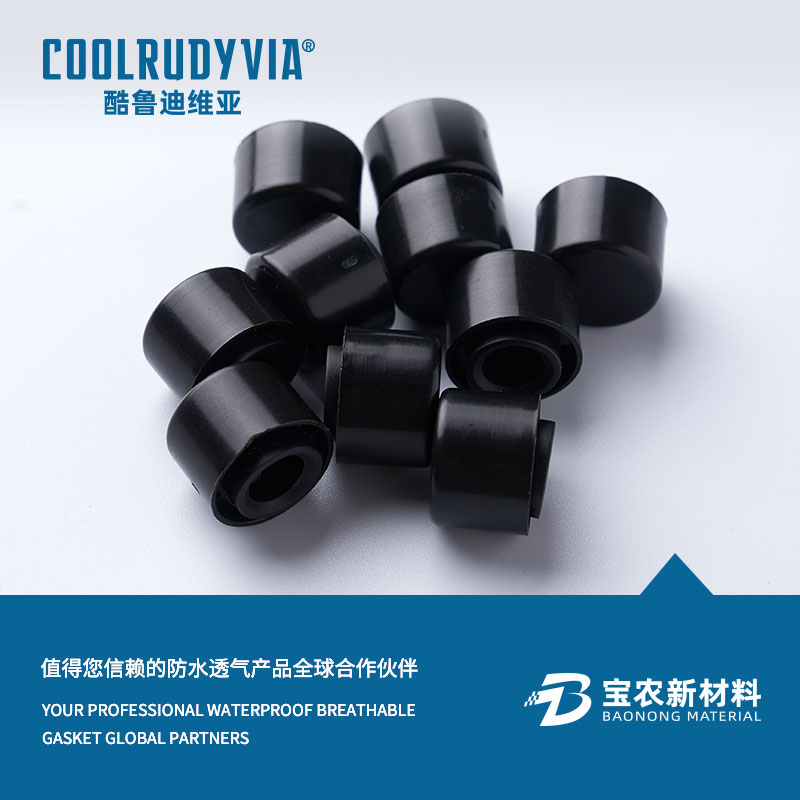
Agricultural chemical bottles, beverage containers, pails, and jerry cans are often sealed when hot and then cooled, producing a strong vacuum that collapses thin walls. A membrane gasket in the cap allows air to re-enter while still holding liquid inside if the container tips over. This is why a waterproof breathable gasket for liquid and solid packaging is now standard in many filling lines; it also reduces the chance of cap deformation during warehouse storage.
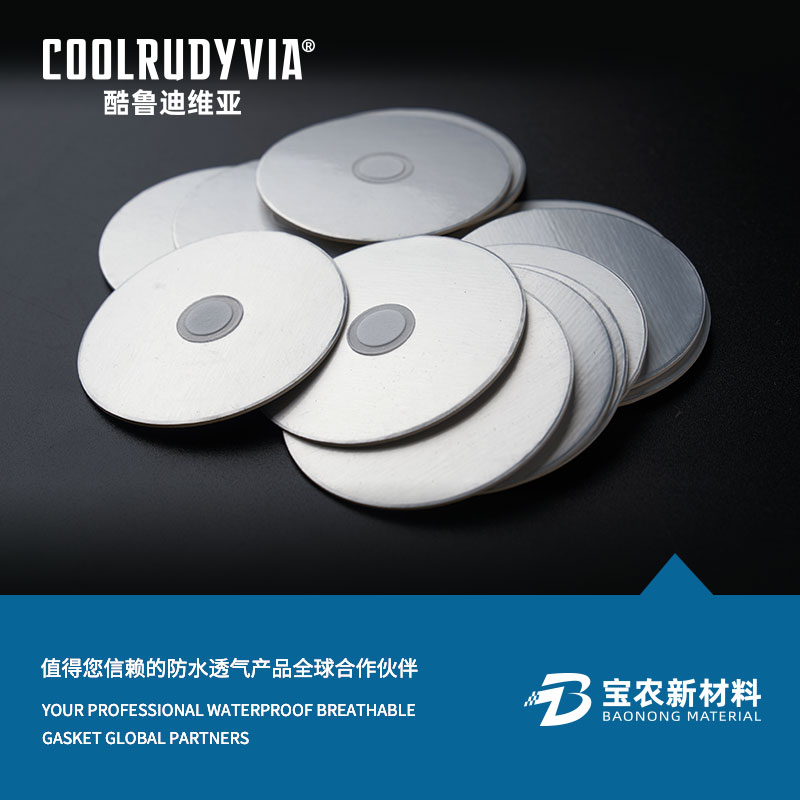 Waterproof Breathable Induction Vented Foil Gasket ManufacturersBaonong Is China Waterproof Breathable Induction Vented Foil Gasket Manufacturers, Factory, We Offer Sealing Gaskets For Small Packaging ...View Product →
Outdoor electronics
Outdoor LED drivers, charging stations, solar junction boxes, and streetlights are exposed to daily temperature swings and rain. Without a vent, water can be sucked into the enclosure at night. An aluminum alloy vent plug for outdoor electronics offers both pressure relief and durable metal threads, making it suitable for enclosures that are opened repeatedly for maintenance.
 Custom Aluminum Alloy Breather Vent Plug Manufacturers, FactoryChangzhou Baonong Is China Aluminum Alloy Breather Vent Plug Manufacturers, Factory, We Offer Custom Aluminum Alloy Waterproof Breather V...View Product →
Manufacturing and Quality Considerations
From an engineering and sourcing perspective, a membrane is only as reliable as the component around it. A single-piece manufacturer controls the full chain: mixing and expanding the ePTFE, cutting or stamping the membrane, overmolding or assembling the carrier, and testing the finished vent. At our facility in Changzhou, we operate more than 90 automated sets of equipment across a 6,000 square metre standard workshop. Every product goes through both automatic inspection and manual rechecking before it is shipped. That dual-check approach matters when a leak in the field is not an easy replacement but a recall or a safety investigation.
Because the company is involved from design to delivery, it can provide customised shapes and compliance testing for automotive or packaging customers. This is an important point: off-the-shelf vents may fit a general application, but when you need a specific membrane area, a different thread size, or a material combination that passes a particular chemical exposure, a responsive manufacturer makes the difference.
Conclusion
Waterproof breathable membranes solve a real and measurable problem: they equalise pressure without letting water in. The key to a successful design is not the membrane's marketing description but its performance data, mounting geometry, and material compatibility. For engineers and buyers evaluating options, the most practical path is to start with the expected pressure cycle, target an air flow rate and ingress protection level, then validate the selected vent under your actual environment. With a clear specification, sealed enclosures can last longer and behave more predictably.
To see how the same ePTFE platform is adapted to different housings and packaging, review our complete range of venting products.

-
Phone Number
+86 138 6105 7907
-
Address
No. 58 Fengjiatou, Xiaoliu Village, Luoyang Town, Wujin District, Changzhou, Jiangsu, China
Copyright © Changzhou Baonong New Material Technology Co., Ltd.All rights reserved
PrivacyCustom Waterproof Breathable Membranes/Gaskets/Plugs/Caps