
 English
 中文简体
中文简体 Español
 عربى
عربى
Stainless Steel Vent Plug: How It Works & Why It Matters
 2026.07.20
 Industry News
Content
- 1 What a vent plug actually is
- 2 Why sealed boxes need to breathe
- 3 How the membrane does its job, step by step
- 4 Why stainless steel is the material of choice
- 5 Thread size, thread type, and fitting compatibility
- 6 Where these plugs actually get used
- 7 Vent plug versus other ways of managing pressure
- 8 Common misconceptions worth clearing up
- 9 A brief history of the idea
- 10 What this means in practice
- 11 Frequently asked questions
- 11.1 What does a vent plug actually do inside an enclosure?
- 11.2 Are stainless steel vent plugs fully waterproof?
- 11.3 What thread size does a vent plug use?
- 11.4 How long does a stainless steel vent plug typically last?
- 11.5 Can a vent plug get clogged or stop working?
- 11.6 Is a vent plug the same thing as a breather valve?
- 11.7 Do all sealed enclosures need a vent plug?
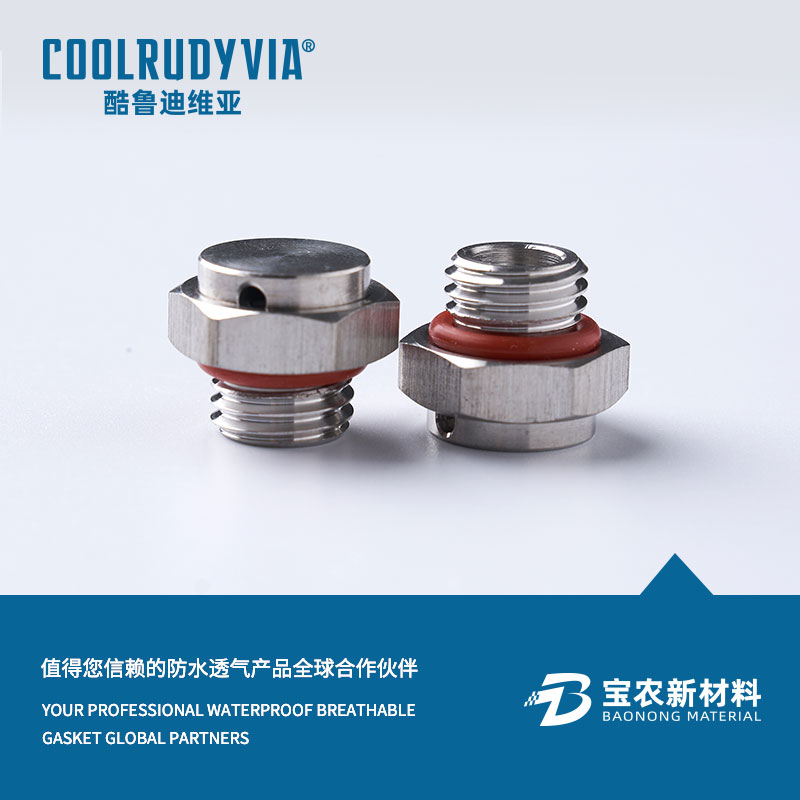
Look closely at a sealed outdoor light fixture, a marine junction box, or an industrial control cabinet, and you will often find a small metal fitting threaded into one wall of the housing. It looks unremarkable, almost like a bolt with a hole through the middle. That fitting is a Stainless Steel Vent Plug, and despite its size, it quietly solves one of the hardest problems in sealed enclosure design: how do you keep water and dust out while still letting a box breathe?
What a vent plug actually is
A vent plug is a small threaded fitting that screws into a drilled and tapped hole on the wall of a sealed enclosure. Unlike a solid plug, which simply blocks the hole, a vent plug contains a thin, porous membrane stretched across an internal channel. That membrane is the entire point of the part. It is engineered with pores measured in fractions of a micron, small enough that liquid water cannot force its way through under normal conditions, but large enough that air molecules pass freely in both directions.
The metal body threads into the enclosure and is sealed against the housing wall with an elastomer gasket, so the only path in or out of the box is through that membrane. In plain terms, it is a controlled breathing hole for equipment that otherwise has to be sealed shut to keep out moisture, insects, and airborne dust.
The stainless steel version specifically refers to the body material. Vent plugs are also made from brass, nylon, and various plastics, but stainless steel is chosen when the fitting needs to resist corrosion, tolerate a wide temperature swing, or hold up to repeated washdown, salt spray, or UV exposure over years of outdoor service.
A sealed enclosure without any venting does not stay sealed for long. Every time the internal air heats and cools, pressure inside the box rises and falls, and that pressure difference is what eventually pulls water past even a well-designed gasket.
Why sealed boxes need to breathe
The core problem a vent plug solves is called pressure differential, and it is easiest to understand by picturing an outdoor light fixture parked in direct sun all afternoon. The air trapped inside heats up and expands, pushing outward against every seam and gasket in the housing. As evening falls and the metal cools, that same air contracts, and the enclosure's internal pressure drops below the pressure of the air outside.
A completely sealed box with no venting has no way to relieve that pressure swing gracefully. Positive pressure stresses gaskets and can force fine dust past seals that were never designed to hold back a pressure gradient. Negative pressure is worse: as the box cools and tries to draw air in to equalize, it pulls that air in through whatever path offers the least resistance, and outdoors that path is usually a gasket seam sitting in a puddle of rainwater. This is sometimes called the "breathing" effect, and it is one of the most common causes of moisture damage inside equipment that otherwise looks completely sealed.
A vent plug interrupts that cycle by giving the enclosure a dedicated, controlled path to equalize pressure. Air moves through the membrane in both directions as temperature changes, so the pressure inside the box never strays far from the pressure outside, and the gaskets around doors, cable glands, and lids are never asked to hold back a pressure difference they were not designed for.
How the membrane does its job, step by step
Temperature changes inside the enclosure
Sunlight, ambient heat, or heat generated by internal electronics raises or lowers the temperature of the trapped air, changing its volume and pressure.
Pressure differential builds across the housing wall
As internal pressure rises above or falls below outside pressure, air begins to push against the vent plug's membrane from whichever side has the higher pressure.
Air molecules pass through the microporous structure
Gas molecules are small enough to travel through the membrane's network of microscopic pores, moving from the high pressure side to the low pressure side until the difference is neutralized.
Water is physically excluded by surface tension
Liquid water forms droplets far larger than the membrane's pores, and the material is typically treated to be hydrophobic, so surface tension keeps water beading on the outside rather than being drawn in.
The cycle repeats continuously
There is no valve to open or close and nothing to wear out mechanically under normal use. The plug simply responds passively to whatever pressure difference exists at that moment.
Why stainless steel is the material of choice
The membrane does the breathing, but the metal body has to survive the environment for years without corroding, cracking, or loosening. Stainless steel earns its place in demanding applications for a specific set of physical reasons, not just general durability.
- Corrosion resistanceThe chromium content in stainless steel forms a thin, self-repairing oxide layer on the surface, which is what allows the part to resist rust even after prolonged exposure to rain, humidity, or salt air near coastal installations.
- Dimensional stabilityThreads cut into stainless steel hold their shape under repeated tightening and thermal cycling far better than softer metals or plastics, which reduces the risk of a plug backing out or stripping over time.
- Wide temperature toleranceStainless steel does not become brittle in cold weather or soften in high heat the way many plastics do, so the seal at the gasket remains consistent across a broad operating range.
- Resistance to UV degradationUnlike plastic bodies, which can chalk, fade, or become brittle after years of sun exposure, a stainless steel body is largely unaffected by ultraviolet light.
- Mechanical strengthThe body can tolerate impact, vibration, and the torque of installation and removal without cracking, which matters for equipment mounted on vehicles, vessels, or vibrating machinery.
Thread size, thread type, and fitting compatibility
Choosing the right vent plug is mostly a matter of matching the thread to the hole already machined or molded into the enclosure. Getting this wrong is the single most common installation mistake, since a thread that is close but not exact can appear to seat correctly while never forming a proper seal.
| Thread designation | Common name | Typical use case |
| M12 x 1.5 | Metric fine thread | Compact electronic enclosures, LED drivers, sensor housings |
| M16 x 1.5 | Metric fine thread | Control boxes, junction boxes, mid-size equipment housings |
| M20 x 1.5 | Metric fine thread | Larger cabinets, outdoor distribution enclosures |
| 1/2 in NPT | National pipe taper | North American industrial equipment, tapered pipe fittings |
| PG9 / PG11 / PG13.5 | Panzergewinde thread | Legacy European cable gland style enclosures |
| 3/4 in BSP | British standard pipe | Marine and industrial equipment in UK and Commonwealth markets |
Beyond the thread itself, three other specifications matter in practice: the ingress protection rating of the finished assembly, the airflow rate the membrane allows, and the gasket material used to seal the plug against the housing wall. A plug rated IP68 with a fluorosilicone or EPDM gasket generally performs well across the widest temperature and humidity range, while nitrile gaskets are a common lower-cost alternative for less demanding indoor applications.
Where these plugs actually get used
The Stainless Steel Vent Plug shows up in far more products than most people realize, precisely because it is designed to be invisible when it is doing its job correctly.
In every one of these cases, the underlying challenge is identical: the equipment inside must be fully isolated from liquid water and particulate contamination, yet the enclosure cannot be allowed to build up pressure that stresses seals or draws moisture inward when it cools. Wherever a housing needs both isolation and pressure stability at once, a vented fitting tends to be part of the design.
Vent plug versus other ways of managing pressure
Engineers have a handful of options for handling pressure inside a sealed enclosure, and each one makes a different tradeoff between simplicity, cost, and performance.
| Method | How it manages pressure | Best suited for |
| Stainless steel vent plug | Continuous passive equalization through a microporous membrane | Enclosures needing long-term outdoor durability with no moving parts |
| Solid plug, no venting | None; pressure differential is left unmanaged | Enclosures with minimal internal heat generation and short service life |
| Mechanical breather valve | Spring-loaded valve opens above a set pressure threshold | Larger equipment with significant pressure swings, such as transformers |
| Desiccant breather | Filters air through a drying agent while equalizing pressure | Applications where internal humidity control matters as much as pressure |
| Nylon or plastic vent plug | Same membrane principle in a lighter, lower-cost body | Indoor or short-service-life equipment without heavy corrosion exposure |
Compared with a mechanical breather valve, a membrane-based vent plug has no moving parts to stick, corrode, or fail to reseat, which is part of why it is favored for smaller enclosures where a valve failure would be difficult to detect until damage had already occurred. Compared with leaving an enclosure unvented, the difference shows up over months and years rather than immediately, in the form of internal corrosion, condensation, or component failure that traces back to a pressure cycle nobody accounted for at the design stage.
In plain terms: a vent plug is not a hole for air to escape through in an emergency. It is a permanently open, water-excluding pathway that keeps the pressure inside an enclosure matched to the pressure outside, at all times, without anyone having to think about it.
Common misconceptions worth clearing up
A surprising number of people assume a vent plug is simply a smaller version of a drain hole, or that any small hole with mesh over it will do the same job. Neither is accurate, and the distinction matters for anyone specifying or troubleshooting sealed equipment.
- It is not a drainA vent plug is mounted with the membrane facing outward and is not designed to let accumulated water drain out of an enclosure; standing water inside a housing points to a separate sealing failure elsewhere.
- Mesh alone is not equivalentA simple mesh screen keeps out insects and large debris but does not stop fine water droplets or dust the way a genuine microporous membrane does.
- It does not need maintenance to function, but it can fail silentlyA membrane clogged with paint overspray, grease, or heavy dust buildup can stop functioning while still looking intact from the outside, so periodic visual inspection is worthwhile on equipment in harsh environments.
- Bigger is not always betterA larger vent plug does not necessarily equalize pressure faster in a meaningful way for most enclosures; matching the plug to the enclosure's specified airflow requirement matters more than choosing the largest available size.
A brief history of the idea
The underlying concept behind the vent plug, a membrane that lets gas through while excluding liquid, predates its use in electronics enclosures by decades. Expanded polytetrafluoroethylene, the material most commonly used for these membranes today, was developed in the early 1970s and quickly found use in breathable fabrics before engineers recognized its potential for sealed housings. As electronics moved outdoors in greater numbers through the late twentieth century, in telecommunications cabinets, traffic control equipment, and eventually consumer-facing outdoor fixtures, manufacturers needed a passive, maintenance-free way to protect increasingly sensitive components from a problem that solid plastic housings alone could not solve. The threaded metal vent plug, combining a familiar mechanical fastener with a membrane borrowed from an entirely different industry, became the practical answer, and stainless steel versions followed as outdoor and marine applications demanded longer service life than plastic bodies could reliably offer.
What this means in practice
A Stainless Steel Vent Plug is a small, unremarkable-looking fitting that solves a problem most people never think about until it goes wrong: the slow, cyclical pressure changes that build up inside every sealed enclosure exposed to changing temperatures. By threading into the housing wall and stretching a microporous membrane across the only open path in or out, it lets air pass freely while keeping liquid water and particulate contamination firmly on the outside. The stainless steel body adds the corrosion resistance, mechanical strength, and long-term durability needed for equipment that has to keep working outdoors, at sea, or on vibrating machinery for years at a time. It is a simple idea with no moving parts, and that simplicity is exactly why it has become a standard feature across so many categories of sealed equipment.
Frequently asked questions
What does a vent plug actually do inside an enclosure?
It lets air pass in and out of a sealed housing as temperature changes, equalizing internal and external pressure while its membrane blocks liquid water and dust from entering through the same opening.
Are stainless steel vent plugs fully waterproof?
The membrane is designed to exclude liquid water under normal pressure and splash conditions, and finished assemblies are commonly rated to IP66, IP67, or IP68 depending on the gasket and membrane combination used.
What thread size does a vent plug use?
Common sizes include M12, M16, and M20 metric threads, along with 1/2 inch NPT and PG-style threads, and the correct choice depends entirely on the tapped hole already present in the enclosure.
How long does a stainless steel vent plug typically last?
Because the body resists corrosion and the membrane has no moving parts to wear out, these plugs commonly remain functional for the full service life of the enclosure they are installed in, often a decade or more in outdoor conditions.
Can a vent plug get clogged or stop working?
Yes; heavy dust accumulation, paint overspray, or grease can block the membrane's pores over time, which is why equipment operating in particularly dirty environments benefits from periodic visual inspection.
Is a vent plug the same thing as a breather valve?
No; a breather valve uses a spring-loaded mechanism that opens at a set pressure threshold, while a vent plug uses a passive membrane that allows continuous, gradual airflow with no moving parts.
Do all sealed enclosures need a vent plug?
Not always; small enclosures with minimal internal heat generation and short service lives can sometimes be left unvented, but any housing that experiences meaningful daily temperature swings benefits from a dedicated pressure equalization path.

-
Phone Number
+86 138 6105 7907
-
Address
No. 58 Fengjiatou, Xiaoliu Village, Luoyang Town, Wujin District, Changzhou, Jiangsu, China
Copyright © Changzhou Baonong New Material Technology Co., Ltd.All rights reserved
PrivacyCustom Waterproof Breathable Membranes/Gaskets/Plugs/Caps