
 English
 中文简体
中文简体 Español
 عربى
عربى
Waterproof Breathable Plug: How It Blocks Water, Not Air
 2026.07.20
 Industry News
Content
- 1 Defining the waterproof breathable plug
- 2 Why a sealed box needs to breathe at all
- 3 How the membrane manages two opposite jobs at once
- 4 Material and construction characteristics
- 5 Specifications that actually matter
- 6 Where this component quietly does its job
- 7 How it compares with other ways of handling the same problem
- 8 Misconceptions worth correcting
- 9 A short history behind the technology
- 10 The takeaway
- 11 Frequently asked questions
- 11.1 What makes a plug both waterproof and breathable at the same time?
- 11.2 Does the plug let water out if it gets inside the enclosure?
- 11.3 How is this different from a simple mesh vent?
- 11.4 What ingress protection rating can this type of plug achieve?
- 11.5 Does the membrane wear out or need to be replaced?
- 11.6 Can this type of plug handle both hot and cold environments?
- 11.7 Is a breathable plug the same as a mechanical breather valve?
Some of the most important parts inside everyday sealed products are the ones nobody ever sees. A Waterproof breathable plug is exactly that kind of part: a small threaded fitting hidden inside a housing wall, doing a job that only becomes obvious the moment it fails. This piece looks at what the component actually is, how it manages to be waterproof and breathable at the same time, and why that combination matters far more than it seems.
A sealed box that cannot breathe is not actually sealed. It is simply waiting for the next temperature swing to find its weakest point.
Defining the waterproof breathable plug
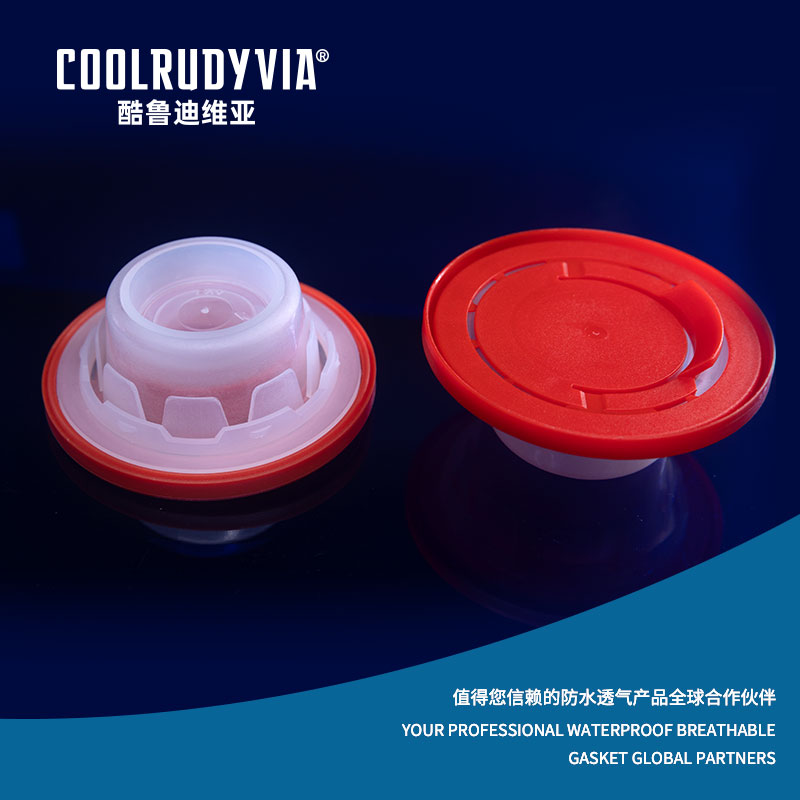
At its simplest, a waterproof breathable plug is a small fitting that threads into a hole in an enclosure wall and contains a thin membrane instead of solid material. That membrane is engineered so that air can pass through it in either direction, while liquid water cannot. The plug's metal or polymer body handles the mechanical job of sealing against the housing, while the membrane inside handles the far more delicate job of letting gas through and keeping liquid out.
The two properties in its name describe two different physical behaviors happening in the same tiny space. "Waterproof" describes what happens at the surface of the membrane, where the pore structure and a hydrophobic coating stop water droplets from passing through, even under moderate pressure such as a splash or driving rain. "Breathable" describes what happens at the molecular level, where individual gas molecules, vastly smaller than a water droplet, slip through that same pore structure with very little resistance.
Put together, the part gives a sealed enclosure something it otherwise cannot have on its own: a way to equalize internal and external air pressure continuously, without ever opening a path for moisture, dust, or insects to get inside.
Why a sealed box needs to breathe at all
Trapped air inside a fully sealed housing expands when it warms and contracts when it cools. With nowhere to go, that pressure change pushes outward against gaskets during the day and pulls inward at night, gradually working moisture and fine particles past seals that were never designed to resist a pressure gradient.
The same temperature swing still happens, but air is allowed to move gradually through the membrane in either direction as needed. Internal pressure stays close to outside pressure at all times, so the enclosure's gaskets are never asked to hold back a pressure difference they were not built for.
This everyday cycle of heating and cooling is sometimes described informally as an enclosure "breathing," and it happens whether or not a manufacturer planned for it. A housing exposed to direct sunlight, an engine bay, or simply the difference between day and night temperatures will experience it repeatedly over its service life. The plug does not stop the cycle from happening; it simply gives the enclosure a safe, dedicated way to go through it without drawing water in.
How the membrane manages two opposite jobs at once
The working principle comes down to a mismatch in scale. Water, even in its finest mist form, exists as droplets that are enormous compared to a single gas molecule. The membrane used in a typical waterproof breathable plug, most often expanded polytetrafluoroethylene, is manufactured with a network of interconnected pores measured in fractions of a micron.
Those pores are wide enough for oxygen, nitrogen, and water vapor molecules to pass through essentially unimpeded, but far too narrow for a liquid water droplet to squeeze through under normal pressure. On top of that physical size barrier, the membrane surface is typically treated to be hydrophobic, meaning water beads up and rolls off rather than spreading out and searching for a way in through capillary action.
The result is a material that behaves almost like a very fine, one-way bouncer for water while remaining completely open to gas. Air moves freely through it in both directions, all day and all night, while liquid water is turned away at the surface regardless of which side of the plug it lands on.
The membrane does not sense pressure and open or close like a valve. It is always open at the microscopic level, letting gas diffuse through continuously in whichever direction equalizes pressure fastest at that moment.
Material and construction characteristics
- 1
Membrane material
Expanded polytetrafluoroethylene is the most common choice because its pore structure can be manufactured with tight, repeatable tolerances and its hydrophobic surface holds up over years of exposure.
- 2
Body material
Stainless steel, brass, nylon, and various engineering plastics are all used for the threaded body, chosen based on the corrosion resistance, weight, and cost requirements of the finished product.
- 3
Gasket and seal
An elastomer gasket, commonly EPDM, silicone, or nitrile, seals the plug against the housing wall so that the membrane remains the only open path in or out of the enclosure.
- 4
Thread interface
The plug threads directly into a tapped hole matched to a specific thread standard, forming a mechanical seal that is independent of, and in addition to, the membrane's function.
- 5
Protective housing or cap
Many designs add a perforated outer cap or shroud over the membrane to protect it from direct impact, abrasion, or heavy debris without blocking airflow.
Specifications that actually matter
Two products can look identical from the outside and perform very differently once installed, because the meaningful specifications are almost all internal. The table below translates the specifications typically found on a datasheet into what they mean in practical terms.
| Specification | Typical value | What it means in practice |
| Ingress protection rating | IP66 to IP68 | Indicates how well the finished assembly resists dust and water, from strong jets to temporary submersion |
| Membrane pore size | 0.2 to 3 microns | Smaller pores exclude finer water droplets but can slightly reduce airflow speed |
| Air flow rate | Measured in liters per minute at a given pressure | Determines how quickly the plug can equalize pressure after a rapid temperature change |
| Operating temperature range | Roughly minus 40 to 100 degrees Celsius | Sets the environments the plug can be installed in without the gasket or membrane degrading |
| Thread type | Metric, NPT, or panel-mount styles | Must match the tapped hole in the enclosure exactly for a proper seal |
Where this component quietly does its job
A Waterproof breathable plug is easy to overlook precisely because it is used in products people interact with constantly. Outdoor lighting fixtures rely on it to survive years of daily heating and cooling without fogging or corroding internally. Automotive sensor housings and lamp assemblies use it to withstand the sharp temperature swings of an engine bay. Telecommunications enclosures mounted on poles or rooftops depend on it to keep sensitive electronics dry through years of rain and humidity. Even consumer devices marketed as fully sealed, from certain outdoor cameras to portable speakers, often contain a version of this same membrane technology scaled down to a much smaller size.
What connects all of these otherwise unrelated products is the same underlying requirement: something inside needs to stay completely dry, but the housing around it cannot be allowed to build up pressure that eventually finds a way to compromise that dryness.
How it compares with other ways of handling the same problem
| Approach | How it behaves | Tradeoff |
| Waterproof breathable plug | Continuous passive pressure equalization through a microporous membrane | No moving parts, but airflow rate is fixed by the membrane's design |
| Fully sealed housing, no venting | No pressure management at all | Simple and cheap, but prone to gasket stress and internal condensation over time |
| Mechanical breather valve | Spring-loaded valve opens once pressure crosses a set threshold | Handles larger pressure swings but introduces a mechanical part that can wear or stick |
| Simple mesh vent | Open weave that blocks large debris and insects only | Does not stop fine water droplets or dust the way a true membrane does |
| Desiccant breather | Filters incoming air through a moisture-absorbing material | Actively dries incoming air but needs periodic desiccant replacement |
The comparison makes the appeal of a membrane-based plug clear for smaller, sealed products in particular. It requires no scheduled maintenance, has nothing to stick or wear out mechanically, and performs the same way on day one as it does years later, provided the membrane itself is never blocked or damaged.
Misconceptions worth correcting
A breathable plug is just a small drain hole.
FactIt is mounted to keep water out, not to let accumulated water drain from inside a housing; a plug is not a substitute for proper internal drainage design.
Any mesh screen achieves the same waterproofing.
FactMesh keeps out insects and large debris, but its openings are far too large to stop fine water droplets or wind-driven mist the way a true microporous membrane can.
A larger plug always equalizes pressure faster in any noticeable way.
FactAirflow rate depends on membrane design as much as physical size, so matching the plug to the enclosure's actual specification matters more than choosing the biggest available option.
A short history behind the technology
The membrane material behind most modern waterproof breathable plugs traces back to expanded polytetrafluoroethylene, developed in the early 1970s and first popularized through breathable outdoor fabrics. Engineers working on sealed electronic and mechanical housings later recognized that the same pore structure keeping rain out of a jacket could keep rain out of an enclosure while still letting trapped air escape. As electronics moved into more demanding outdoor, automotive, and industrial settings through the following decades, this borrowed material became a standard, purpose-built component rather than a repurposed fabric technology, eventually taking the compact threaded plug form used across countless sealed products today.
The takeaway
A waterproof breathable plug solves a problem that is easy to ignore until it causes real damage: the slow pressure cycle that every sealed enclosure experiences as temperatures change throughout the day. By combining a mechanically sealed threaded body with a membrane that lets gas pass while excluding liquid water, it allows a housing to stay genuinely sealed against moisture while still equalizing pressure continuously and automatically. It has no moving parts to wear out, requires essentially no maintenance under normal conditions, and quietly extends the working life of whatever it protects.
Frequently asked questions
What makes a plug both waterproof and breathable at the same time?
Its internal membrane has pores small enough to block liquid water droplets while remaining wide enough for individual gas molecules to pass through freely in either direction.
Does the plug let water out if it gets inside the enclosure?
No; it is designed to keep water from entering, not to drain water that has already accumulated inside, so standing water inside a housing usually points to a separate sealing issue.
How is this different from a simple mesh vent?
A mesh vent blocks insects and large debris but has openings far too large to stop fine water droplets, while a true breathable membrane blocks liquid water at a microscopic scale.
What ingress protection rating can this type of plug achieve?
Finished assemblies commonly reach IP66, IP67, or IP68 depending on the specific membrane, gasket material, and installation quality.
Does the membrane wear out or need to be replaced?
Under normal conditions it has no moving parts and does not wear out, though heavy buildup of paint, grease, or dense dust can block its pores and reduce performance over time.
Can this type of plug handle both hot and cold environments?
Yes; typical operating ranges extend from roughly minus 40 to 100 degrees Celsius, covering everything from cold outdoor winters to hot engine bay conditions.
Is a breathable plug the same as a mechanical breather valve?
No; a breather valve uses a spring mechanism that opens once pressure crosses a set threshold, while a breathable plug uses a passive membrane that allows continuous, gradual airflow with nothing mechanical to move.

-
Phone Number
+86 138 6105 7907
-
Address
No. 58 Fengjiatou, Xiaoliu Village, Luoyang Town, Wujin District, Changzhou, Jiangsu, China
Copyright © Changzhou Baonong New Material Technology Co., Ltd.All rights reserved
PrivacyCustom Waterproof Breathable Membranes/Gaskets/Plugs/Caps