
 English
 中文简体
 Español
 عربى

China Waterproof and Breathable Membrane, Gaskets, Plugs, Caps and Vent Plug Guide
 2026.10.15
 Industry News
Content
- 1 What a Waterproof and Breathable Membrane Vent Plug Does
- 2 The Membrane Sets the Performance Ceiling, Not the Housing
- 3 Automotive Vent Caps: Where Pressure Equalisation Fails First
- 4 Waterproof Breathable Gaskets and Plugs for Liquid and Solid Packaging
- 5 Outdoor Electronics: Choosing Between Stainless Steel, Plastic and Aluminium Alloy Vent Plugs
- 6 Sourcing Checklist for Waterproof and Breathable Membrane Suppliers in China
- 7 Frequently Asked Questions
A headlamp that fogs from the inside after a cold night, a 20-litre agrochemical drum that bulges in a hot warehouse, a roadside sensor that drowns after two weeks of monsoon rain: three different failures, one shared root cause. In every case the enclosure could not move air. The part that prevents all three costs a few cents, and it gets specified badly more often than any seal in the assembly. It is a waterproof and breathable membrane, gasket, plug, cap or vent plug, built around expanded PTFE (ePTFE) and produced at volume by manufacturers in China such as Changzhou Baonong New Material Technology Co., Ltd., which sells under the brand COOLRUDYVIA.
This guide covers what these components actually do, where specifications go wrong, and what to verify before you approve a supplier.
What a Waterproof and Breathable Membrane Vent Plug Does
A waterproof and breathable membrane vent plug equalises pressure between a sealed enclosure and the outside atmosphere while blocking liquid water, dust and oils. Everything else about the component, including housing material, thread and mounting style, exists only to get that membrane onto the enclosure without creating a leak path.
Skip the function and three failures follow:
- Pressure differential. Seal one litre of air, heat it from 20 C to 80 C, and internal pressure rises by roughly 20 percent, about 20 kPa, unless the volume can change. Something gives: a lens pops a clip, a drum deforms, a gasket extrudes.
- Condensation. Moisture trapped at assembly condenses on the coldest surface. In a headlamp that is the lens, which is why fogging appears on the first cold morning after production.
- Seal pumping. A hot enclosure pushes air out through the seal. When it cools, the same path pulls water and dust back in. The seal is not leaking in the conventional sense, yet the enclosure still fills with water.
Definition: a waterproof breathable vent is a membrane-based component that equalises pressure between a sealed enclosure and the outside atmosphere while maintaining an ingress protection barrier. The membrane is the functional element; the housing only determines how the component is mounted.
The membrane is a microporous ePTFE film. Air and water vapour pass through pores far smaller than a liquid water droplet, so the enclosure breathes without leaking. How the film and the housing are matched in practice is covered in this guide to the core functions and material selection of waterproof breathable vents.
The Membrane Sets the Performance Ceiling, Not the Housing
Two vent plugs with identical housings can differ tenfold in airflow and in the liquid pressure they hold, because the functional element is the membrane rather than the shell. ePTFE membranes used in venting components typically have pores between 0.1 and 0.5 micron, porosity that can exceed 80 percent, and water entry pressures in the region of 1 bar for standard grades.
The trade-off is direct. Open the pore structure for more airflow and you lower the pressure the membrane can hold before liquid pushes through. That is why a vent sized for a sealed camera module is not automatically suitable for a washdown enclosure. Standard grades are also treated with an oleophobic coating, because oils and other low-surface-tension liquids wet out an untreated membrane and turn it into a permanent leak.
Automotive Vent Caps: Where Pressure Equalisation Fails First
In automotive lighting and under-hood electronics, the vent is usually the first component to fail, because it absorbs the harshest combination of temperature cycling, water and contamination. A headlamp lens can reach 80 C in service and then meet a cold-water splash, and a single thermal cycle drives a large pressure swing across the membrane.
The test conditions show why material choice matters. IP69K, the close-range high-pressure standard used for automotive and food-processing equipment, applies water jets at 80 to 100 bar and 80 C. IP67 and IP68 immersion tests run at 1 metre and 1.5 metres respectively. A vent that survives one is not guaranteed to survive the other.
Figures of this kind come from the manufacturer: Changzhou Baonong states that it runs more than 90 automated lines in a workshop of over 6,000 square metres and puts every part through two inspection stages. For buyers, the practical conclusion is that automotive vent caps must be validated against the specific thermal and wash cycle of the application rather than ordered to a generic IP rating. Selection criteria for this category are set out in this ePTFE vent plug selection guide for automotive applications.
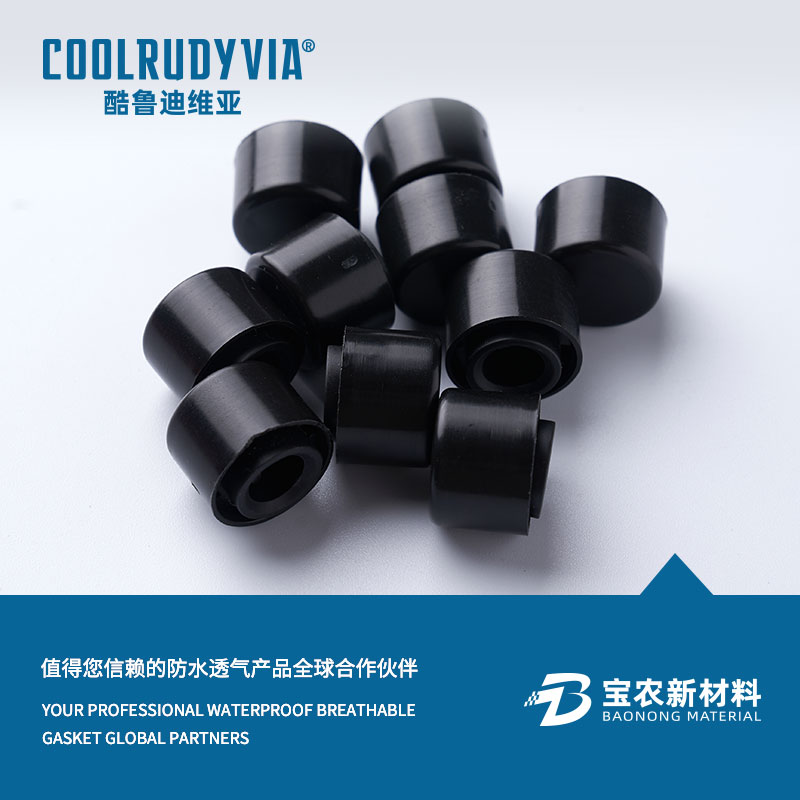 Custom Automotive Lamp Vent Caps for Pressure BalanceWaterproof breathable vent caps for automotive lamps, customizable in size and structure to balance pressure and protect LEDs and electronics from moisture.View Product →
Waterproof Breathable Gaskets and Plugs for Liquid and Solid Packaging
In liquid and solid packaging, a waterproof breathable gasket or plug works as a safety device: it lets a sealed container equalise pressure instead of deforming, splitting, or pulling its cap liner loose.
The forces are larger than they look. Move a filled drum from sea level to a distribution centre at 2,000 metres and ambient pressure drops by about 20 percent. Fill the same drum at 25 C and store it at 55 C and headspace pressure climbs by roughly 10 percent. Beverage bottles, agrochemical containers and industrial jerry cans see combinations of both, sometimes within the same week.
A surfactant-rich agrochemical formulation can cut a membrane water entry pressure by more than half. Qualify the vent with the actual product, never with water alone.
This is where packaging projects fail quietly. Water entry pressure is measured with water, but many liquids, especially agrochemicals and cleaning chemicals, contain surfactants that lower surface tension and wet out a membrane that would hold water indefinitely. Selection therefore has to weigh the contents, the fill temperature, the storage profile and the transport route together, not as separate line items.
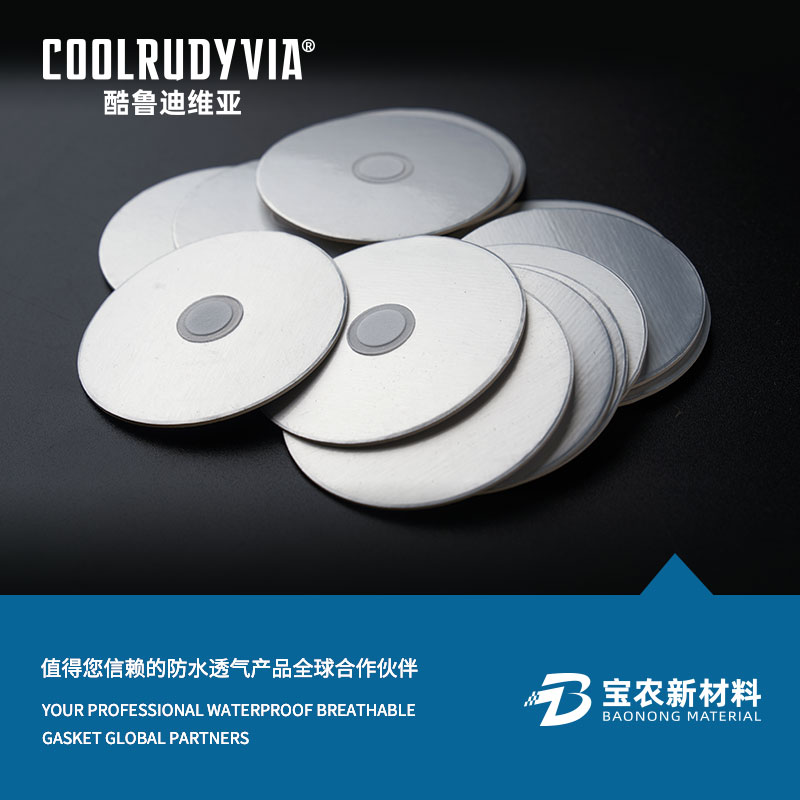 Induction Vented Foil Gasket for Liquid and Solid PackagingWaterproof breathable induction gasket for small containers, balancing pressure while blocking water, liquids, dust and microorganisms in varied chemical packaging.View Product →
Outdoor Electronics: Choosing Between Stainless Steel, Plastic and Aluminium Alloy Vent Plugs
Choose the housing of an outdoor vent plug from the installation environment, not from the drawing: stainless steel for salt spray, washdown and long service life, plastic for cost and weight, aluminium alloy for heat transfer and mechanical stiffness.
Highest corrosion resistance. The default for marine, coastal and washdown enclosures where salt exposure is continuous and replacement is expensive.
Good strength-to-weight ratio and useful heat conduction. Suits enclosures where the vent also helps dissipate heat from power electronics.
Lowest cost and weight, and electrically insulating. Best where loads are light and the environment is sheltered from prolonged UV and salt spray.
Outdoor electronics add one more variable: UV and humidity. A vent on a pole-mounted cabinet sees years of sunlight and daily condensation cycles, so both the housing and the membrane bond have to survive. Where corrosion resistance is the deciding factor, stainless steel remains the safe default for outdoor enclosures and marine-grade equipment.
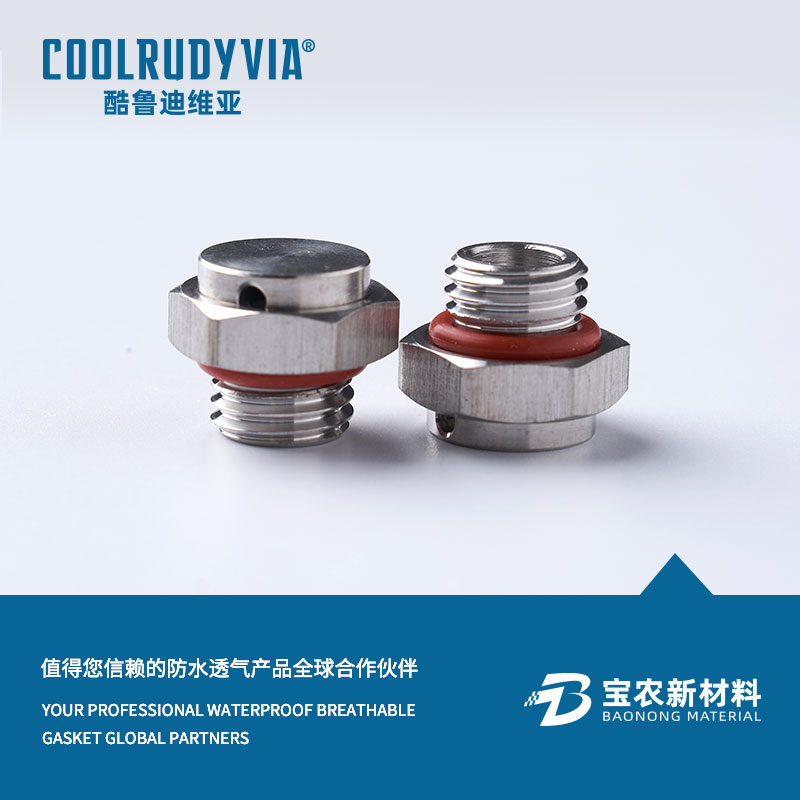 Custom Stainless Steel Vent Plug for Outdoor ElectronicsWaterproof breathable stainless steel vent plug for outdoor electronics and lighting, customizable for thread type, airflow and installation in corrosive or humid locations.View Product →
Sourcing Checklist for Waterproof and Breathable Membrane Suppliers in China
Approve a Chinese vent component supplier on four things before price: membrane data, material certification, ingress protection test reports, and lot traceability. A supplier that cannot produce these four will cost more in field returns than it saves on unit cost.
| What to verify | Why it matters | Evidence to request |
| Membrane pore size and water entry pressure | Sets airflow and the maximum liquid pressure the vent holds | Batch data for pore size, airflow at 70 mbar and water entry pressure |
| Oleophobic or chemical-resistant treatment | Oils and surfactant products wet out untreated membranes and cause leaks | Coating specification and immersion results using the real product |
| Housing material grade | Stainless steel, aluminium alloy and plastic behave differently in salt spray, heat and vibration | Material certificates plus salt-spray or thermal cycling reports |
| Membrane-to-housing bond | A weak weld or adhesive joint becomes the leak path long before the membrane fails | Cross-section images and pull-out or burst test results |
| Ingress protection level | IP67, IP68 and IP69K describe very different test severities | IP test reports that state depth, duration or jet pressure and temperature |
| Inspection regime | Vent defects are often invisible, so sampling alone is risky | Description of the automated and manual inspection stages, with the AQL used |
| Lot traceability | Field failures must be traced back to a membrane batch and an assembly line | Traceability records and the retention period for production data |
Ask for the conditions behind every number. A water entry pressure figure without a stated membrane grade, or an IP rating without a stated depth, duration and jet pressure, tells a buyer almost nothing. Suppliers who can quote those conditions are usually the ones who can also hold them in production.
Frequently Asked Questions
What is the difference between a waterproof breathable membrane and a vent plug?
The membrane is the functional film; the vent plug is the finished assembly of membrane, housing, bonding method and mounting feature. You buy a vent plug, but you are specifying membrane performance, so always ask which membrane grade sits inside the part.
How do I choose between IP67, IP68 and IP69K for a vent plug?
Match the rating to the cleaning and exposure regime. IP67 covers 30 minutes at 1 metre, IP68 typically 1.5 metres or deeper by agreement, and IP69K covers close-range jets at 80 to 100 bar and 80 C. Washdown and food-processing equipment normally needs IP69K, while sheltered outdoor enclosures rarely do.
Can a vent plug be installed after the enclosure is assembled?
Yes, and it is common practice. Snap-fit, threaded, press-fit and adhesive-mounted versions all exist, so the vent can be added on a separate line or after functional testing. What matters is that installation leaves the membrane undamaged and that no adhesive squeeze-out blocks the airflow path.
How long does an ePTFE vent membrane last?
The membrane itself does not wear out under normal conditions. Failures come from contamination, physical damage or a broken bond. Keeping the membrane out of direct spray and away from lubricants and solvents that can wet out the oleophobic coating is what determines service life in the field.

-
Phone Number
+86 138 6105 7907
-
Address
No. 58 Fengjiatou, Xiaoliu Village, Luoyang Town, Wujin District, Changzhou, Jiangsu, China
Copyright © Changzhou Baonong New Material Technology Co., Ltd.All rights reserved
PrivacyCustom Waterproof Breathable Membranes/Gaskets/Plugs/Caps