
 English
 中文简体
 Español
 عربى

Induction Vented Foil Gasket Manufacturers: Selection and Sourcing Guide
 2026.09.23
 Industry News
Content
- 1 What an Induction Vented Foil Gasket Is and How It Works
- 2 Specifications That Separate Capable Induction Vented Foil Gasket Manufacturers
- 3 Pressure Data: What a Sealed Container Does Without a Vent
- 4 Vented or Standard, One-Piece or Two-Piece Foil Gasket
- 5 How to Vet an Induction Vented Foil Gasket Manufacturer Before You Order
- 6 Where Vented Foil Gaskets and Vent Plugs Are Used
- 7 Frequently Asked Questions About Induction Vented Foil Gaskets
A one-litre PET bottle of liquid fertiliser leaves the filling line at 25 C and can reach 55 C inside a shipping container. With 200 mL of headspace, that rise is enough to push internal pressure past 100 mbar, which is where thin-wall bottles deform and induction seals begin to peel.
An induction vented foil gasket removes that failure mode. It bonds to the container rim under induction heating and still lets gas pass, so the container breathes without leaking. Sourcing one is a specification exercise, not a catalogue exercise.
This guide covers how vented foil gaskets are built, the five numbers worth writing into a purchase specification, the pressure data behind the design, and the checks that separate a capable manufacturer from a reseller.
What an Induction Vented Foil Gasket Is and How It Works
An induction vented foil gasket is a multi-layer closure seal in which an aluminium foil carrier is bonded to a container rim by induction heating, while a microporous membrane laminated into the same disc allows gas exchange and blocks liquid water.
Vented foil gasket, defined: an induction seal with a built-in gas path. It keeps two promises at the same time, liquid containment under pressure and pressure equalisation within seconds of a temperature change.
The sealing step is unchanged from a conventional foil liner, which is why vented versions drop into existing filling lines without new equipment:
- The induction sealer applies an alternating magnetic field for one to three seconds.
- Eddy currents heat the aluminium layer to roughly 150 to 200 C while the container rim stays cool.
- The heat-seal lacquer on the underside melts and bonds to the PE, PP, or PET rim as it cools.
- The membrane, exposed through a die-cut window, becomes the only path for gas to move.
Construction is where performance actually lives. Most parts sold by induction vented foil gasket manufacturers follow the same stack:
| Seal layer | Heat-seal lacquer or EVA film | 20 to 50 microns | Bonds to the rim under induction heat and sets peel strength |
| Carrier | Aluminium foil | 20 to 40 microns | Couples with the induction field and carries the disc |
| Vent path | ePTFE membrane with PP or PET support | 0.05 to 0.20 mm | Passes air while blocking water and particles |
| Release backing | Silicone-coated paper or PET | 0.05 to 0.10 mm | Protects the seal layer until the cap is applied |
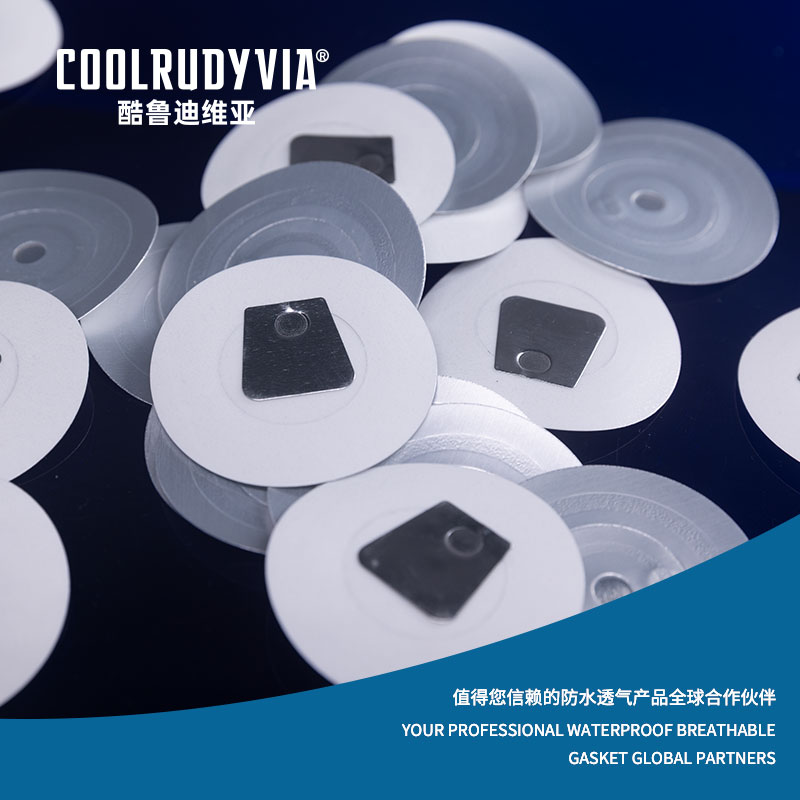 Aluminum Foil Induction Sealing Gasket for Container LidsThis composite liner uses induction heating to bond with plastic or glass mouths, providing airtight, tamper-evident sealing. Its available diameters track cap sizes, and even a 0.05 mm thickness drift can alter disc seating on sealing heads, so precision matters for beverage and industrial containers.View Product →
Diameters track the cap rather than the bottle. Formats of 28 mm, 38 mm, 45 mm, and 63 mm cover most beverage, agrochemical, and industrial containers, and a 0.05 mm thickness drift is enough to change how the disc sits on the sealing head.
Specifications That Separate Capable Induction Vented Foil Gasket Manufacturers
Five numbers decide whether a vented foil gasket performs: airflow, water entry pressure, peel strength, thermal range, and dimensional tolerance. Request all five on the finished part, tested by production lot, not on the base membrane.
| Specification | Typical value | Why it matters | How to verify |
| Airflow | 100 to 800 mL/min at 7 kPa | Sets how fast a container equalises after a temperature swing | Airflow bench test on finished gaskets |
| Water entry pressure | 0.5 to 1.5 bar held for 30 minutes | Blocks water during washing, rain, and immersion | Pressure cell test with the gasket sealed to a cup |
| Induction peel strength | 6 to 12 N per 15 mm strip on PE | Predicts whether the seal survives transport vibration | Peel test 24 hours after sealing and after 48 hours at 40 C |
| Thermal range | -40 to 120 C continuous | Covers filling, transport, and warehouse extremes | Oven and cold chamber cycling |
| Dimensional tolerance | +/- 0.3 mm diameter, +/- 0.05 mm thickness | Affects sealing head contact and cap fit | Inline vision plus AQL sampling |
Airflow is the number buyers underestimate. A vent window of 10 square millimetres of ePTFE typically passes 200 to 400 mL/min at 7 kPa, enough to equalise a one-litre headspace in seconds, while a 5 square millimetre window on the same membrane can take minutes.
Membrane data is a starting point. The part is the specification.
Pressure Data: What a Sealed Container Does Without a Vent
A sealed container without a vent builds internal pressure roughly in proportion to its temperature rise, and the effect is measurable. The chart below shows indicative internal pressure at 60 C for common sealed formats.
Internal pressure at 60 degrees Celsius, in mbar
Indicative values for a 200 mL headspace filled with an aqueous product.
Ideal gas behaviour gives the first estimate. A 25 C to 60 C rise moves absolute pressure from about 1.01 bar to 1.13 bar, roughly 120 mbar of added pressure. Flexible PET and HDPE panels absorb part of that, which is why 80 to 140 mbar is a realistic working range and why a correctly sized vent pulls the same container back to single-digit millibars.
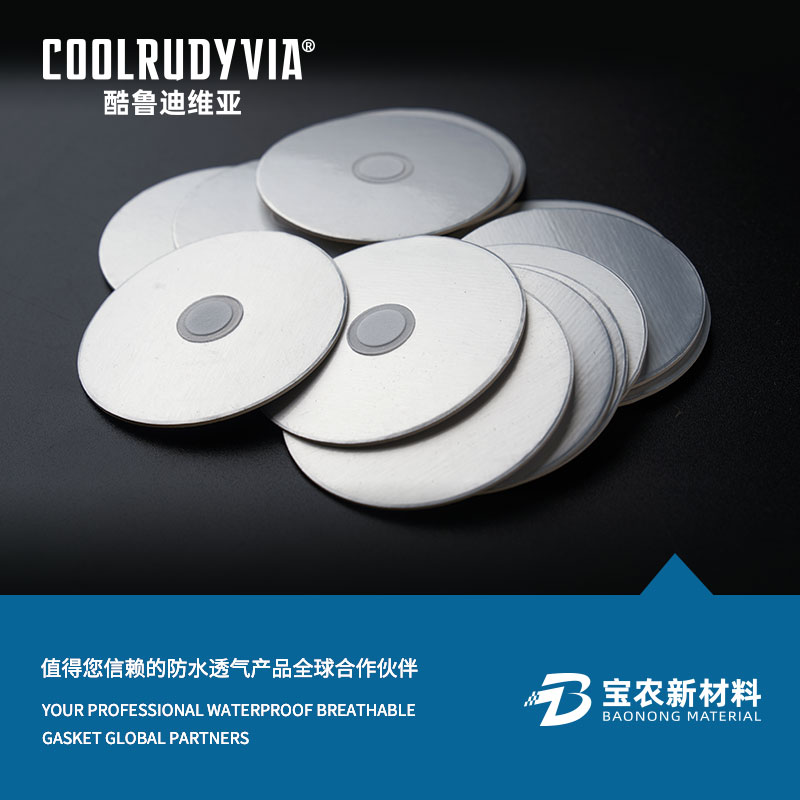 Waterproof Breathable Induction Vented Foil GasketDesigned to release pressure from sealed containers, this vented foil gasket balances airflow and water entry pressure as a pair. Airflow and water resistance must be specified together, since high vent rates alone do not guarantee protection against liquid ingress at low pressure.View Product →
Venting is not leaking. A gasket that passes 400 mL/min and lets water through at 0.3 bar fails the application, so airflow and water entry pressure have to be specified as a pair.
Vented or Standard, One-Piece or Two-Piece Foil Gasket
Use a vented foil gasket when the product off-gasses or the container deforms under pressure. Keep a standard induction liner for dry, shelf-stable products where pressure never becomes the limiting factor.
Standard induction foil liner
- Lowest unit cost and the simplest application step
- Best moisture and oxygen barrier per gram of material
- Fails once headspace pressure exceeds bottle stiffness
- Needs no vent window and no membrane lamination
Induction vented foil gasket
- Equalises pressure seconds after a temperature swing
- Blocks water and dust while still passing air
- Costs more per piece because of the membrane and die-cut
- Requires airflow validation, not only a seal test
One-piece or two-piece counts too. A one-piece vented gasket laminates the membrane inside the disc, keeping the stack thin and the application to a single step. A two-piece design holds a separate membrane unit in the cap, which raises airflow and lets the vent be replaced without breaking the induction seal. Thin-wall bottles usually take one-piece, while drums and large containers usually take two-piece.
How to Vet an Induction Vented Foil Gasket Manufacturer Before You Order
Judge a manufacturer on four verifiable capabilities: lamination control, die-cut tolerance, inspection depth, and a documented sealing window. Everything else follows from these.
Ask for finished-part airflow and water entry pressure. Bench data taken from production lots, with sample size and test method stated, tells you more than any membrane datasheet.
Request the peel curve, not a single peel value. Bond strength on PE and PP keeps changing for the first 48 hours, so a reading taken at one temperature hides a lot.
Audit lamination and die-cutting. A wrinkle across the membrane becomes a water path. Waterproof breathable foil gaskets depend on a continuous adhesive bond around the vent window, and that bond is made on the laminating line, not in a catalogue.
Confirm the inspection routine. Automated inline checks catch dimensional drift; manual AQL sampling catches bonding and appearance defects. Retention samples from each lot matter when a claim arrives a year later.
Get the sealing window in writing. Dwell time, power setting, and the scorch limit on the cap differ from a standard liner, because the membrane stack changes how heat travels through the disc.
Pilot runs pay for themselves. Seal 5,000 to 20,000 pieces on the production line, hold them at 40 C for 72 hours, then re-test peel strength and water entry pressure. Failures surface in that window far more often than in a single sealing trial.
Where Vented Foil Gaskets and Vent Plugs Are Used
Three industries drive most of the volume: automotive lighting and components, liquid and solid packaging, and outdoor electronics enclosures.
Automotive
Headlamps and under-hood components see temperature swings above 80 C. A vented membrane equalises pressure without breaking the ingress protection rating, and automotive vent caps are usually validated with compliance testing.
Agrochemical and beverage packaging
Containers from 500 mL to 5 L in HDPE and PET form the highest-volume application. Pressure, not moisture, is the leading cause of panel deformation and label wrinkling in these packs.
Outdoor electronics
Enclosure vents in aluminium alloy, plastic, or stainless steel handle condensation and wash-down pressure. Where a foil seal does not fit, a threaded vent plug performs the same pressure-balancing job.
 Custom Plastic Breather Vent Plug for Pressure BalancingA low-cost threaded vent plug that prevents condensation and balances pressure in enclosures such as outdoor electronics and lighting. When a foil seal is not suitable, this plastic plug handles pressure differentials while offering waterproof and breathable performance for general outdoor use.View Product →
Specify the failure you are preventing and the choice becomes straightforward: pressure damage in a sealed bottle points to a vented foil gasket, while condensation inside a sealed housing points to a vent plug.
Frequently Asked Questions About Induction Vented Foil Gaskets
Does an induction vented foil gasket still pass a leak test?
Yes, when the test is defined correctly. A vented gasket is verified for liquid containment under pressure, not for a perfectly closed air path. Air passes at a few hundred millilitres per minute while water is held at 0.5 bar and above.
Which membrane material sits inside these gaskets?
Expanded PTFE dominates because it is hydrophobic, chemically inert, and stable from -40 C to 120 C, with pore sizes of 0.1 to 0.5 micron. Polypropylene and UHMWPE membranes serve lower-cost, lower-temperature applications.
Can a vented gasket run on existing induction sealing equipment?
Usually yes, with no hardware change, because the aluminium carrier and heat-seal lacquer behave like a standard foil liner. Power and dwell may need adjustment when the membrane stack increases total disc thickness.
What order volume justifies a custom vented foil gasket?
As a rule of thumb, custom diameters and membrane areas need 50,000 to 100,000 pieces per run to absorb tooling and setup. Standard 28 mm, 38 mm, and 45 mm formats can start considerably lower.

-
Phone Number
+86 138 6105 7907
-
Address
No. 58 Fengjiatou, Xiaoliu Village, Luoyang Town, Wujin District, Changzhou, Jiangsu, China
Copyright © Changzhou Baonong New Material Technology Co., Ltd.All rights reserved
PrivacyCustom Waterproof Breathable Membranes/Gaskets/Plugs/Caps