
 English
 中文简体
 Español
 عربى

Vent Cap for Automotive Lamps: A Practical Selection Guide for OEM Engineers
 2026.09.17
 Industry News
Content
Why Automotive Lamp Vent Caps Are Not Optional
A vent cap for automotive lamps is a functional component that equalizes pressure inside a sealed lamp housing while keeping water, oil mist, and road dust from entering. The lamp assembly is designed with a single vent hole, and that hole must be protected by an ePTFE vent cap. Without this component, the housing is not truly sealed.
The heat from a modern LED module makes the problem worse than with halogen lamps. A halogen bulb runs at roughly 300°C, but LED drivers and optics operate in a sealed cavity with a much larger air volume relative to their heat output, which produces a quicker pressure ramp.
What actually goes wrong without it:
- Condensation on the inner reflector and lens, which cuts luminous output and creates concentrated hot spots that accelerate LED degradation
- Oil and dust drawn in during the contraction phase, leaving a permanent film on the inner lens
- Cyclic stress on the adhesive bead and snap-fit clips, which can lead to seal failure within a few thousand hours
- Housing cracking in thermal shock when a cold lamp is hit with high-pressure washing
How a Vent Cap for Automotive Lamps Works
An automotive lamp vent cap is a housing element that carries an ePTFE membrane. The membrane's microporous structure lets air molecules pass through to equalize pressure while blocking liquid water, oil mist, and dust particles. The membrane is the functional core; the cap defines its geometry and mounting method.
Air molecules are roughly 0.3 nm in diameter, so they pass through the membrane freely. A water droplet under automotive service conditions is at least 1,000 μm across, which is thousands of times larger than the membrane pores. The same geometry stops salt spray, oil mist, and fine dust from being pulled in when the lamp cools down. This asymmetry is what allows a headlamp to breathe without ever drawing in moisture.
 Waterproof Permeable Vent Membrane for Automotive Headlamp CondensationThis adhesive-backed ePTFE membrane allows air molecules to pass while blocking water droplets, salt spray, and oil mist, making it an effective solution for preventing condensation in car headlight and taillight housings.View Product →
Changzhou Baonong New Material Technology Co., Ltd. manufactures automotive vent caps under the COOLRUDYVIA brand using ePTFE membranes produced in-house. The company operates a 6,000 m² facility with automated assembly lines, so the membrane and the cap are made as a matched pair rather than separate components.
Specifying the Right Vent Cap for Automotive Lamps
Specifying a vent cap for automotive lamps requires balancing four parameters: airflow volume, water entry pressure, temperature tolerance, and mounting geometry. The right combination depends on the lamp's internal air volume, the heat source, the connector position, and the IP rating the final assembly must meet. A vent cap that solves a condensation problem in a taillight may not survive the duty cycle of an off-road work lamp.
When in doubt, supply the actual vent hole diameter and the lamp's internal air volume to the component manufacturer. Those two numbers let the vent cap supplier recommend a membrane area and mounting style before the first prototype tool is cut.
| Option | Airflow at 10 kPa | Water entry pressure | Typical application |
| Snap-fit PA66 cap with ePTFE | 300-500 mL/min | 15 kPa | Headlamp units with limited packaging space |
| Threaded cap with bonded membrane | 200-400 mL/min | 20 kPa | Off-road and truck lamps exposed to pressure washing |
| Membrane-only vent patch | 180-350 mL/min | 10 kPa | Taillight and interior lamp assemblies |
Selection should also account for the membrane area. A smaller ePTFE membrane may pass the leak test at room temperature but fail to equalize pressure quickly enough in a cold environment. In that case, the vent cap needs a larger membrane or a more permeable membrane grade. A detailed ePTFE vent plug selection guide breaks down each spec with more depth.
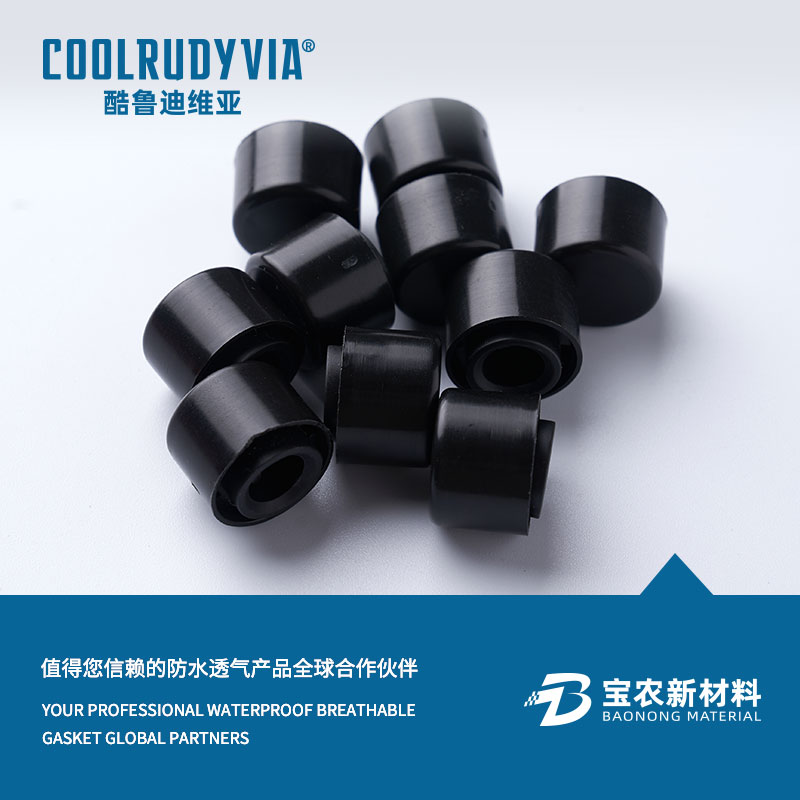
Custom Vent Cap for Automotive Lamps Protecting ePTFE MembraneThis vent cap shields the waterproof breathable membrane from external dust, mud, and water, ensuring long-term waterproof and breathable performance, crucial for maintaining the seal integrity of automotive lamp housings.View Product →Installation and Quality Control Considerations
Most vent cap failures in automotive lamp production come from incorrect installation rather than membrane defects. A perfectly specified ePTFE vent cap will underperform if the vent hole is blocked, the membrane is damaged during press-fit, or the cap is installed with excessive force.
In production, check every batch with the following quality gates:
- Inline airflow test against the QC limit for the approved membrane grade
- Water entry pressure test on a sample from each production lot
- Visual inspection of the membrane edge after press-fit
- Thermal cycling test on first-off parts from a new tool or material change
Frequently Asked Questions
What is the difference between a vent cap and a breather plug?
A vent cap is a broad term for any cap-shaped component that carries an ePTFE membrane for pressure equalization. A breather plug typically refers to a cylindrical threaded or press-fit insert used in enclosures. In automotive lamps, the vent cap is the standard solution, while breather plugs are more common in gearbox and battery housings.
Can a vent cap for automotive lamps be used in other sealed enclosures?
Yes. The same ePTFE membrane technology applies to outdoor electronics, liquid packaging, and industrial enclosures. The application changes the mounting geometry and IP requirement, but the pressure equalization principle remains the same.
How do I verify that an automotive lamp vent cap is working?
Submerge the assembled lamp in water and apply a small pressure change, then check for bubbles. A more precise method is to measure airflow through the vent with a pressure decay test. In production, inline airflow testing is the most reliable way to catch a blocked or damaged membrane.
Are automotive lamp vent caps replaceable or serviceable?
Most automotive vent caps are designed for the life of the lamp and are not field-serviceable. The cap is press-fit or ultrasonically welded, so replacement requires disassembly. Some aftermarket designs use snap-fit installation to allow replacement after a lamp is repaired.

-
Phone Number
+86 138 6105 7907
-
Address
No. 58 Fengjiatou, Xiaoliu Village, Luoyang Town, Wujin District, Changzhou, Jiangsu, China
Copyright © Changzhou Baonong New Material Technology Co., Ltd.All rights reserved
PrivacyCustom Waterproof Breathable Membranes/Gaskets/Plugs/Caps