
 English
 中文简体
 Español
 عربى

Vented Cap Liners: A Technical Guide to Pressure Balance and Seal Integrity
 2026.09.17
 Industry News
Content
When a 25-litre high-density polyethylene drum of industrial solvent left a factory in Jiangsu on a 35°C morning and reached a warehouse in Guangdong six weeks later, the lid had visibly bulged about 4 mm. The closure had not failed in the traditional sense. It had simply not been designed to manage the internal pressure that built up over that journey.
This is the reality of sealed packaging. Temperature swings, altitude changes, and off-gassing from the contents all create pressure differentials. When there is no release path, the pressure pushes against the liner, the cap, and the container walls. A vented cap liner gives the gas a controlled way out while keeping the liquid, the vapour, and the dirt firmly inside.
What Is a Vented Cap Liner and How Does It Work?
A vented cap liner is a closure component that incorporates a microporous membrane, typically made of ePTFE, to allow gas exchange while preventing the passage of liquids and particles. This definition is the core of why these liners exist at all: they create a pressure equalisation path that a standard solid liner cannot provide.
The membrane works through form, not function alone. Expanded polytetrafluoroethylene (ePTFE) is stretched into a network of microscopic pores, with typical sizes ranging from 0.1 to 1.0 micron. That pore range lets air molecules pass through while repelling liquid water due to surface tension and the inherent hydrophobic properties of the material.
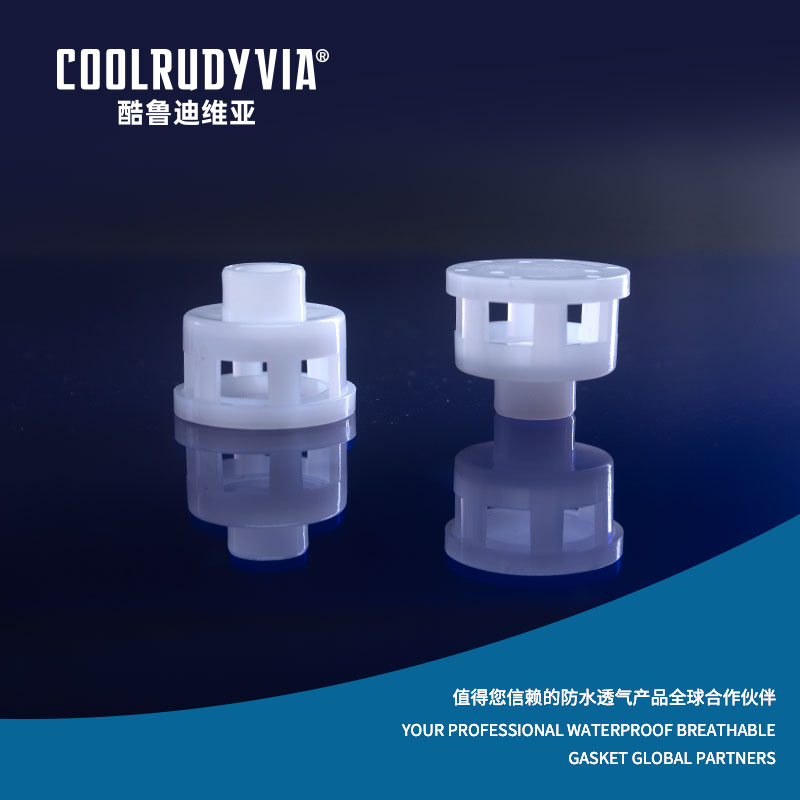 Waterproof Breathable Plug with ePTFE Membrane for Pressure EqualizationThis vent plug balances internal pressure and blocks liquids and dust. Its ePTFE membrane allows air passage while repelling water, making it suitable for enclosures exposed to temperature changes or outdoor conditions.View Product →
In practice, a vented cap liner allows a container to breathe out pressure without losing its seal. This is why the same principle appears in packaging, in automotive enclosures, and in outdoor electronics. At Changzhou Baonong New Material Technology Co., Ltd., these elements are manufactured under the COOLRUDYVIA brand, with ePTFE membrane and structural components integrated into a single component.
- Pore size between 0.1 and 1.0 micron controls airflow and liquid resistance.
- Hydrophobic membrane blocks water ingress at pressure up to several bar.
- Temperature tolerance from -40°C to +120°C covers most industrial transport and storage conditions.
- Compatibility with polyethylene and polypropylene resins used in standard closures.
Why Pressure Balance Determines Seal Integrity in Sealed Containers
A 5°C temperature increase can raise internal pressure inside a 25-litre fully sealed container by roughly 8 kPa (0.08 bar). That pressure is enough to distort a flat cap liner and begin the sequence of leaks, bulged lids, and hard-to-open caps that distributors know too well.
This is not a theoretical calculation; it has direct consequences. During an average intermodal transport, containers experience both ambient temperature changes and altitude extremes. When the external pressure drops, any sealed container with a rigid liner becomes a balloon. When the temperature rises, volatile compounds inside the container generate additional partial pressure.
Vented cap liners solve this by providing a fixed release diameter. Gas moves out when the internal pressure exceeds the membrane's flow threshold, and the container returns to equilibrium. This makes pressure balance the starting point for seal integrity, not a concern after the seal has already been compromised.
If you are dealing with chemicals, pesticides, or high-performance automotive fluids, the off-gassing factor is even more significant. The combination of temperature swings and volatile contents often makes vented cap liners a necessary requirement rather than an optional upgrade.
How to Select the Right Vented Cap Liner for Your Application
Selecting the right vented cap liner starts with defining whether your priority is pressure release, liquid retention, or a combination of both. A liner designed for a pesticide drum will not automatically suit a food-grade beverage container.
The first decision is whether you really need a vented liner at all. Compare the two types of closure components.
Standard Cap Liner
- Seals against liquid and vapour completely
- No gas exchange path
- Lowest unit cost
- Suitable for stable, full containers
Vented Cap Liner
- Allows controlled gas release
- Maintains liquid-seal integrity
- Higher initial cost, lower total transit risk
- Suitable for pressure-building contents
Once you have confirmed the need, the next step is to evaluate the container material and the industry requirements. The table below maps common applications to the liner construction most often used.
| Application | Container Type | Liner Construction | Venting Priority |
| Pesticide / agrochemical | HDPE drum | Aluminium foil / ePTFE laminate | Off-gassing + temperature |
| Beverage or liquid supplement | PET or glass bottle | Food-grade foam / ePTFE disc | Air ingress on squeeze |
| Automotive component | ABS or nylon housing | Alloy vent plug / membrane cap | Condensation + pressure |
| Outdoor electronics | Polycarbonate enclosure | Stainless / aluminium vent plug | Altitude + IP rating |
The material of the container matters because the liner must be compatible with the closure surface. For example, PET bottles require a different surface roughness and torque profile than HDPE drums. A high-quality vented cap liner from an integrated manufacturer should be available in multiple formats to suit these combinations.
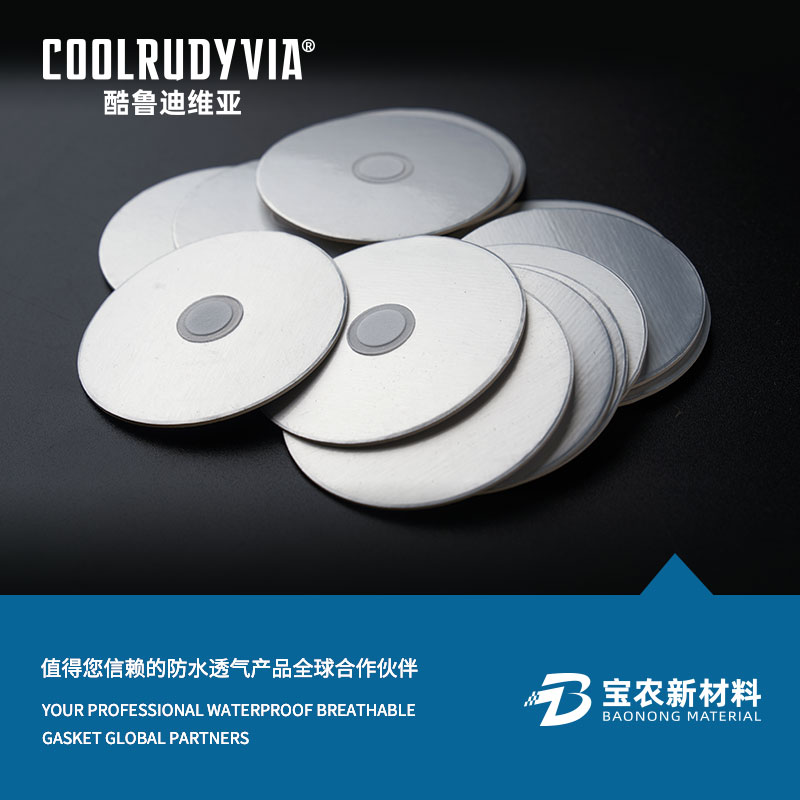 Custom Vented Foil Gasket for Container Compatibility and Pressure ReliefDesigned for various container materials, this induction vented foil gasket provides automatic pressure equalization while maintaining a secure seal. It suits small packaging needs across multiple industries.View Product →
For a deeper look at how a breathable gasket functions inside a cap, see our article on how a waterproof breathable gasket works.
Vented Cap Liner Installation and Quality Control
Proper placement of the vented liner is as important as the liner material. A centered, uniform torque ensures the ePTFE membrane works and does not get crushed during assembly.
In an automated factory, the liner is fed onto the cap or closure, then the cap is torqued onto the container with a controlled force. If the torque is uneven or the liner is off-centre, the pressure-balancing path can become blocked or the liquid seal can fail.
- Verify the liner diameter matches the cap inside diameter.
- Ensure the container rim is clean and free of debris before capping.
- Apply torque according to the liner manufacturer's specification, typically between 5 and 15 Nm for 25-litre containers.
- Run a final leak check for at least 30 seconds under your expected vacuum or pressure condition.
For outdoor electronics or automotive housings where the vent is mounted on the enclosure itself rather than inside a cap, a rigid vent plug is often the preferred solution. It provides the same pressure-equilibrating function in a threaded or push-fit format.
 Aluminum Alloy Breather Vent Plug for Enclosure ProtectionA rigid threaded or push-fit vent plug that prevents pressure buildup in outdoor electronics and automotive housings. Its construction and quality control help reduce field failure risks in demanding environments.View Product →
The quality-control data from our stainless steel vent plug testing shows that material selection and torque consistency are the two factors most often tied to pressure leak failure. Our experience with automated inspection at the Changzhou facility has proven that incorporating both automated and manual checks reduces field failure risk by a meaningful margin.
Frequently Asked Questions about Vented Cap Liners
What is the difference between a vented cap liner and a regular cap liner?
A regular cap liner is an impermeable barrier. A vented cap liner includes a microporous membrane, usually ePTFE, that lets gas cross the barrier while still stopping liquid. This makes vented liners the better choice for containers that build internal pressure during storage or transit.
Can vented cap liners keep water out while letting air in?
Yes. The pore structure of the ePTFE membrane is small enough that liquid water cannot pass, but air molecules can. A vented cap liner can therefore maintain a liquid-tight seal even in constant contact with water, which is why it is used in outdoor enclosures and chemical drums.
Do vented cap liners work with all types of containers?
They work with most rigids, including HDPE, PET, and glass, when the liner has the correct diameter, thickness, and surface compatibility. For soft pack or squeeze bottles, the same principle is applied with a flexible membrane insert rather than a rigid liner.
How do I know if my container needs a vented cap liner?
If your product undergoes temperature variation greater than 10°C, is transported over elevations above 1,000 m, or contains volatile compounds, pressure buildup is likely. In that case, a vented cap liner is the practical choice.

-
Phone Number
+86 138 6105 7907
-
Address
No. 58 Fengjiatou, Xiaoliu Village, Luoyang Town, Wujin District, Changzhou, Jiangsu, China
Copyright © Changzhou Baonong New Material Technology Co., Ltd.All rights reserved
PrivacyCustom Waterproof Breathable Membranes/Gaskets/Plugs/Caps