
 English
 中文简体
 Español
 عربى

Threaded Vent Plug Guide: How ePTFE Membrane Plugs Protect Your Enclosures
 2026.09.10
 Industry News
Content
A 12-inch outdoor LED driver enclosure sat under a mid-afternoon sun. Temperatures inside climbed from 18 C at dawn to 57 C by 2 p.m., and the pressure differential pulled moisture through the cable gland. By month four, the driver board showed the first signs of corrosion. A threaded vent plug with an ePTFE membrane would have prevented that entirely, equalizing pressure continuously while blocking water ingress down to the rated IP level.
This guide explains what a threaded vent plug is, why the thread profile matters, how to choose between aluminium, stainless steel, and plastic bodies, and what to do in assembly to make the IP rating reproducible.
What Is a Threaded Vent Plug and How Does It Work?
A threaded vent plug is a screw-in pressure equalization device that uses an ePTFE membrane to vent air and vapor while resisting water, dust, and oil.
The core concept is simple. Expanded polytetrafluoroethylene, known as ePTFE, is stretched into a microporous membrane with pores that are roughly 0.2 micron in size. Liquid water droplets are thousands of times larger, so they cannot pass. Gas molecules, on the other hand, move freely through the structure. Changzhou Baonong New Material Technology Co., Ltd. builds the COOLRUDYVIA brand around this principle, combining the membrane with a machine-tapped threaded body for repeatable installation.
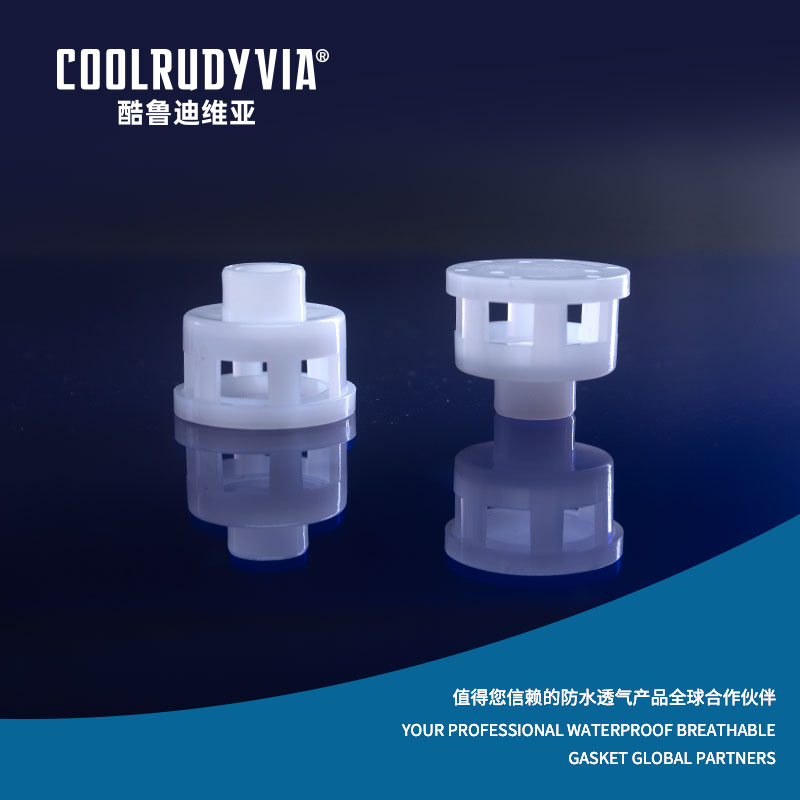 Waterproof Breathable Plug with ePTFE Membrane and Threaded BodyThis plug uses an ePTFE microporous membrane to let gas pass while blocking liquid and dust, balancing pressure inside enclosures. Its machine-tapped threaded body allows repeatable installation and reliable sealing.View Product →
In practical terms, the plug does four jobs at once:
- Equalizes internal pressure as temperature rises or falls
- Blocks water ingress during washing, rain, or submersion
- Stops condensation from forming inside the housing
- Prevents vacuum collapse when a sealed container cools
Why Threaded Mounting Matters for Pressure Equalization
Threaded mounting gives you a repeatable seal that stays firm under vibration, thermal cycling, and repeated maintenance.
Press-fit plugs rely on friction, which decays as plastic relaxes. Adhesive-mounted vents are permanent and difficult to field-service. A threaded plug, by contrast, uses mechanical threads to hold the membrane in place with a consistent compressive load. That consistency is what makes an IP68 rating reproducible in production rather than dependent on assembly luck.
Automotive headlamp modules are a clear example. The lamp housing warms up when the lights turn on and cools quickly during a rain shower. Without a vent, the housing sees a negative pressure spike in minutes. A threaded vent plug installed on the rear housing lets air escape and re-enter without letting water through, preventing the fogging that customers notice in the lens.
- Threaded: removable, torque-controlled, high vibration resistance
- Press-fit: low cost, susceptible to creep, single-use
- Adhesive: permanent seal, no maintenance, hard to rework
For a deeper look at vehicle-specific requirements, read our threaded vent plug selection guide for automotive modules.
Threaded Vent Plug Materials: Aluminium Alloy, Stainless Steel, or Plastic?
Match the body material to the corrosive load, temperature range, and weight budget of your enclosure.
Three materials dominate this category from Changzhou Baonong: aluminium alloy, stainless steel, and engineering plastic. Each one changes the plug's corrosion resistance, weight, and thermal behavior.
| Material | Corrosion Resistance | Weight | Temp Range | Typical Use |
| Aluminium Alloy | Good | Light | -40 to +120 C | Outdoor electronics, automotive housings |
| Stainless Steel | Excellent | Heavy | -40 to +150 C | Marine, chemical, food processing |
| Engineering Plastic | Moderate | Very light | -30 to +100 C | Consumer electronics, packaging |
Aluminium Alloy Threaded Vent Plugs
Aluminium is the default choice when weight and heat dissipation matter. It performs well in automotive and solar applications, and the threaded body can be anodized for extra corrosion protection. An M12 aluminium plug in the COOLRUDYVIA range typically weighs about 40% less than an equivalent stainless steel plug.
 Aluminum Alloy Breather Vent Plug for Lightweight Heat DissipationIdeal for automotive and solar applications, this aluminum plug offers lightweight construction and good heat dissipation, with an anodized option for extra corrosion protection. Its M12 version weighs about 40% less than stainless steel.View Product →
Stainless Steel Threaded Vent Plugs
Stainless steel adds long-term durability in wet or chemical environments. If the enclosure faces salt spray, cleaning agents, or food-grade sanitation, stainless is the safer specification. It also tolerates a wider operating temperature window, which is why stainless steel vent plugs appear in high-power lighting and marine control boxes.
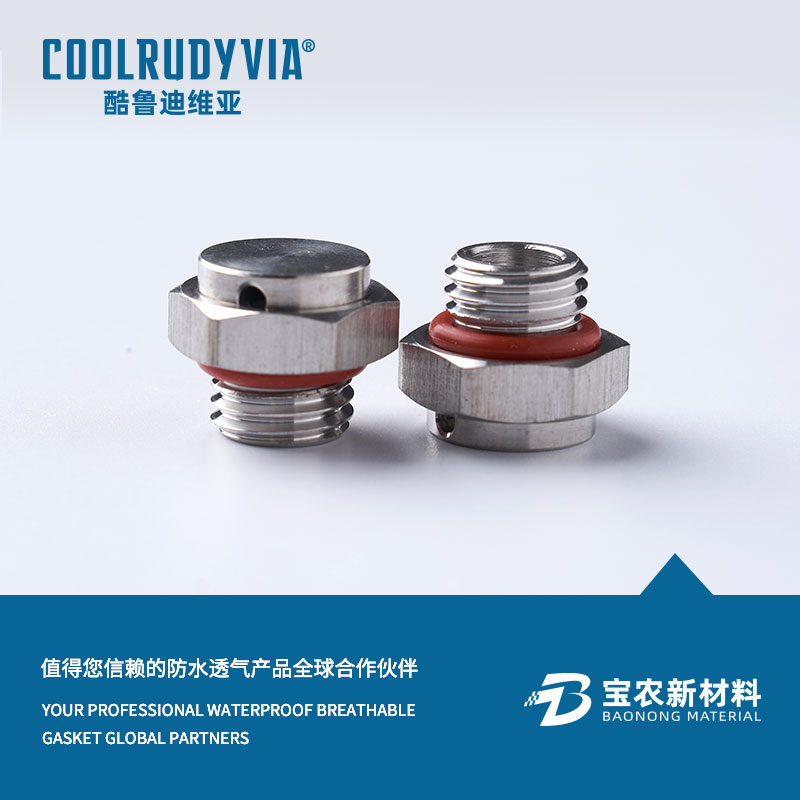 Stainless Steel Vent Plug for Corrosion Resistance in Harsh EnvironmentsStainless steel construction provides long-term durability in wet or chemical environments, making it suitable for salt spray, cleaning agents, or food-grade sanitation. It also tolerates wider operating temperatures for high-power lighting and marine use.View Product →
Plastic Threaded Vent Plugs
Plastic plugs are the most economical and are available in Nylon or polycarbonate grades. They are ideal for consumer electronics and packaging where high-temperature exposure is limited. The smooth thread surface also prevents galling when the plug is removed for service.
Threaded Vent Plug Installation and IP Rating Considerations
Install a threaded vent plug with the right torque, a clean gasket seat, and the correct orientation to achieve the enclosure's IP rating.
Airflow capacity scales with thread size. The chart below shows the nominal airflow at 10 mbar differential for standard metric threads.
Five steps make the rating repeatable on the production line:
- Drill the pilot hole and tap the thread to the plug's pitch specification.
- Degrease the mounting surface and seat the O-ring or gasket without twisting.
- Thread the plug in by hand until finger-tight, then torque to the supplier value.
- Verify the membrane is not covered by paint, label, or adhesive after installation.
- Confirm the IP rating with a spot test on the first production unit.
For a complete maintenance and re-testing schedule, follow our threaded vent plug installation guide.
Frequently Asked Questions
What IP rating can a threaded vent plug achieve?
A COOLRUDYVIA threaded vent plug with a correctly fitted O-ring can meet IP67 or IP68 specifications, and selected stainless steel models pass IP69K washdown validation. The IP rating depends on the interface between the plug body and the enclosure, not on the membrane alone.
How much airflow does a vent plug need?
Use a minimum of 250 ml/min at 10 mbar for a 5 L enclosure under a 2 C/min temperature swing. Larger volumes scale proportionally, so a 25 L enclosure would need around 800 ml/min.
Can a threaded vent plug be reused after removal?
Yes. A threaded plug can be removed and reinstalled several times without losing its sealing capability. Replace the O-ring before reuse if it shows flattening, cracks, or permanent deformation.
What is the difference between a threaded vent plug and a vent cap?
A plug screws into a tapped hole, while a cap is pressed or snapped onto a port. Plugs are preferred where the housing is machined or molded with a thread, because they deliver a more consistent seal under vibration.

-
Phone Number
+86 138 6105 7907
-
Address
No. 58 Fengjiatou, Xiaoliu Village, Luoyang Town, Wujin District, Changzhou, Jiangsu, China
Copyright © Changzhou Baonong New Material Technology Co., Ltd.All rights reserved
PrivacyCustom Waterproof Breathable Membranes/Gaskets/Plugs/Caps